A throbbing tooth can make everything feel urgent. You might be holding cold water on one side of your mouth, avoiding chewing, and searching for antibiotics used for tooth infection because you want the fastest way to stop the pain.
That reaction is completely understandable. Dental pain can be sharp, deep, relentless, and exhausting. But a painful tooth usually isn't just “acting up.” It often signals inflammation, infection, or damage inside the tooth that needs a real diagnosis before anyone can choose the right treatment.
The most important thing to know is simple. Antibiotics can help in some dental situations, but they usually do not cure the problem by themselves. Lasting relief usually comes from treating the source, not just calming the symptoms.
A Toothache Is More Than Just Pain
By the time a patient calls our office on a weekend, the story is often familiar. The tooth started as a dull ache, then became a steady throb, and now it hurts to bite, sleep, or even think clearly. Some notice swelling. Others notice a bad taste, a feeling of pressure, or a tooth that suddenly feels taller than the rest.
Those symptoms can point to a tooth infection. In some cases, infection leads to an abscess, which is a pocket of pus caused by bacteria entering tissues where they do not belong. Deep decay, a cracked tooth, failing dental work, or advanced gum disease can all create that opening. Once the nerve space inside the tooth becomes inflamed or infected, pressure rises inside a closed space. That is one reason dental pain can become so intense so quickly.
The impact beyond the tooth
A tooth infection can disrupt far more than your mouth. People eat less, sleep poorly, miss work, and have trouble concentrating because the pain is constant and draining.
The bigger concern is spread. If swelling increases, the area becomes harder to open, or you start feeling sick overall, the problem may no longer be limited to one tooth. That is the point where prompt dental evaluation matters most.
Tooth pain is a signal that something is wrong at the source and needs a diagnosis.
What a dentist is looking for
In the chair, the goal is to identify the source of the pain, not just confirm that something hurts. A cavity reaching the nerve, a cracked cusp, an abscess near the root, gum infection, sinus pressure, or even clenching can produce similar symptoms. They do not all need the same treatment.
At Grand Parkway Smiles, I focus on a few practical questions first:
- Where is the infection or inflammation starting?
- Is it confined to the tooth, or is it affecting nearby tissues?
- Is the tooth restorable, or is removal the healthier option?
- Will the patient improve with a procedure, medication, or both?
That is why two patients with what sounds like the same toothache can leave with very different treatment plans. The right diagnosis is what leads to real relief and a healthy outcome.
Why Antibiotics Alone Cannot Fix a Tooth Infection
The biggest misconception about dental infections is that the right pill will “knock it out.” In many cases, it won't. It may reduce bacterial load, calm some swelling, or slow spread in the short term, but it often doesn't remove the infected tissue or drain the trapped pressure inside the tooth or abscess.

The smoke alarm and the fire
Think of antibiotics like silencing a smoke alarm while a fire is still burning in the wall. The room gets quieter, but the damage continues unless someone removes the source.
With many tooth infections, the source is one of these:
- Dead or dying pulp inside the tooth
- Pus trapped in an abscess
- A crack or decay pathway that keeps feeding bacteria
- A tooth that can't heal without internal treatment or removal
If that source stays in place, the problem often returns.
What the dental guidelines support
The American Dental Association recommends against routine antibiotics for most localized pulpal and periapical conditions. Instead, it prioritizes definitive treatment such as pulpotomy, pulpectomy, nonsurgical root canal treatment, or incision and drainage. Antibiotics are reserved when there is systemic involvement, such as fever or malaise, or when a patient is severely immunocompromised, according to the ADA guidance on dental pain and swelling.
Practical rule: If the source stays in the mouth, the infection often stays in the story.
What actually cures the infection
The right procedure depends on what your exam and X-rays show:
- Root canal therapy: Used when the tooth can be saved and the infected tissue inside needs to be removed. If you want a plain-language overview, this root canal guide explains how treatment removes the source while preserving the tooth.
- Incision and drainage: Used when swelling or pus needs a direct outlet.
- Extraction: Chosen when the tooth is too damaged to restore safely.
In practice, antibiotics are best thought of as an adjunct. They can support treatment in selected cases. They do not replace treatment.
The Most Common Antibiotics for Tooth Infections
If a patient comes in with a swollen jaw, a tender tooth, and signs that the infection is spreading, an antibiotic may be part of the treatment plan. The key word is part. The prescription supports care when it is indicated, but the lasting fix still comes from treating the source inside the tooth or around the root.
For infections that do call for medication, dentists usually start with narrower-spectrum options that cover the bacteria most commonly involved in dental infections without using broader coverage than the situation requires. In routine practice, amoxicillin and penicillin V potassium are common first-line choices.
Why amoxicillin is so common
Amoxicillin is prescribed often in dental care, and a CIDRAP summary of U.S. dental prescribing data notes that it remains the most common antibiotic dentists write for.
That pattern fits what many dentists see in practice. When an antibiotic is appropriate, amoxicillin is often a practical first choice because it covers many common oral bacteria and is usually tolerated well. It is also familiar to patients, which can make it easier to review dosing, side effects, and what to watch for at home.
First-line antibiotics for dental infections
| Antibiotic | Typical Use Case | Key Consideration |
|---|---|---|
| Amoxicillin | Common first-line option when a dental antibiotic is indicated | Often chosen for common oral bacteria and a favorable tolerability profile |
| Penicillin V potassium | Another first-line choice for appropriate dental infections | A longstanding option that still has a role in standard dental prescribing |
| Amoxicillin-clavulanate | Considered when broader coverage may be appropriate based on the clinical picture | Broader coverage can also mean more digestive side effects, so it should be used selectively |
What patients should understand about these medications
Choosing an antibiotic is not a matter of picking the strongest pill. The right prescription depends on the exam, the pattern of swelling, your medical history, and whether there are signs the infection has moved beyond the tooth.
A few points matter:
- Pain by itself does not automatically mean antibiotics are needed: A painful tooth may need a root canal, drainage, or extraction rather than medication.
- Your health history changes the safest choice: Allergies, pregnancy, digestive problems, and drug interactions all affect prescribing.
- Shorter, targeted treatment is usually better: More coverage is not better care if it adds risk without helping you heal.
In the chair, this is a judgment call based on what is happening in front of us. A patient with mild localized symptoms may need prompt dental treatment and no antibiotic at all. A patient with facial swelling, fever, or difficulty opening fully may need both a procedure and medication.
Antibiotics can help control a dental infection in selected cases. They do not remove the infected nerve, drain trapped pus, or repair a damaged tooth.
Alternatives When First-Line Antibiotics Are Not an Option
A common office conversation goes like this: “I'm allergic to penicillin, so what can I take instead?” The better question is, “What is the safest option for my medical history, and do I also need treatment to remove the source of the infection?” That distinction matters because a substitute antibiotic may help control spread in selected cases, but it still does not clean out an infected tooth, drain an abscess, or repair a cracked or decayed tooth.

When penicillin allergy changes the plan
A reported penicillin allergy does change prescribing, but it should not end the conversation. Some patients had a mild rash as a child. Others have had hives, swelling, or trouble breathing. Those are very different risk profiles, and they can lead to different antibiotic choices.
In practice, I look closely at what happened, how long ago it happened, what other medications the patient takes, and whether the infection appears localized or more widespread. The goal is not to find a “stronger” backup. The goal is to choose the option with the best balance of safety and likely benefit.
Common alternatives and their trade-offs
Several alternatives may be considered, depending on the clinical picture and the patient's health history:
- Cephalexin: Sometimes considered if the reported penicillin allergy is not a severe immediate reaction and the patient's history supports its use.
- Azithromycin: An option in some cases when penicillin-based drugs are not appropriate, though it is not automatically the best substitute for every infection.
- Metronidazole: Used for specific bacterial coverage needs, often alongside another part of treatment rather than as a simple one-for-one replacement.
- Clindamycin: Still useful in selected situations, but many dentists use it more cautiously because of its side-effect risks.
Why clindamycin deserves extra caution
Clindamycin is familiar to many patients because it was prescribed often in the past. Familiar does not always mean preferred. The main question is whether its benefits outweigh its risks for the person sitting in the chair.
That is where judgment matters. A patient with a history of bowel problems, medication sensitivities, or multiple prescriptions may not be well served by a routine fallback choice. At Grand Parkway Smiles, this is part of why we review the full medical picture before writing anything down. The antibiotic choice is only one piece of the plan, and the lasting fix still comes from the dental procedure that removes the infection at its source.
Understanding Antibiotic Side Effects and Resistance
A patient often comes in hoping the antibiotic will be the easy part. Then the stomach upset starts, or the swelling does not improve because the infected tooth is still the source of the problem. That is why every prescription needs a clear reason.
The side effects patients notice first
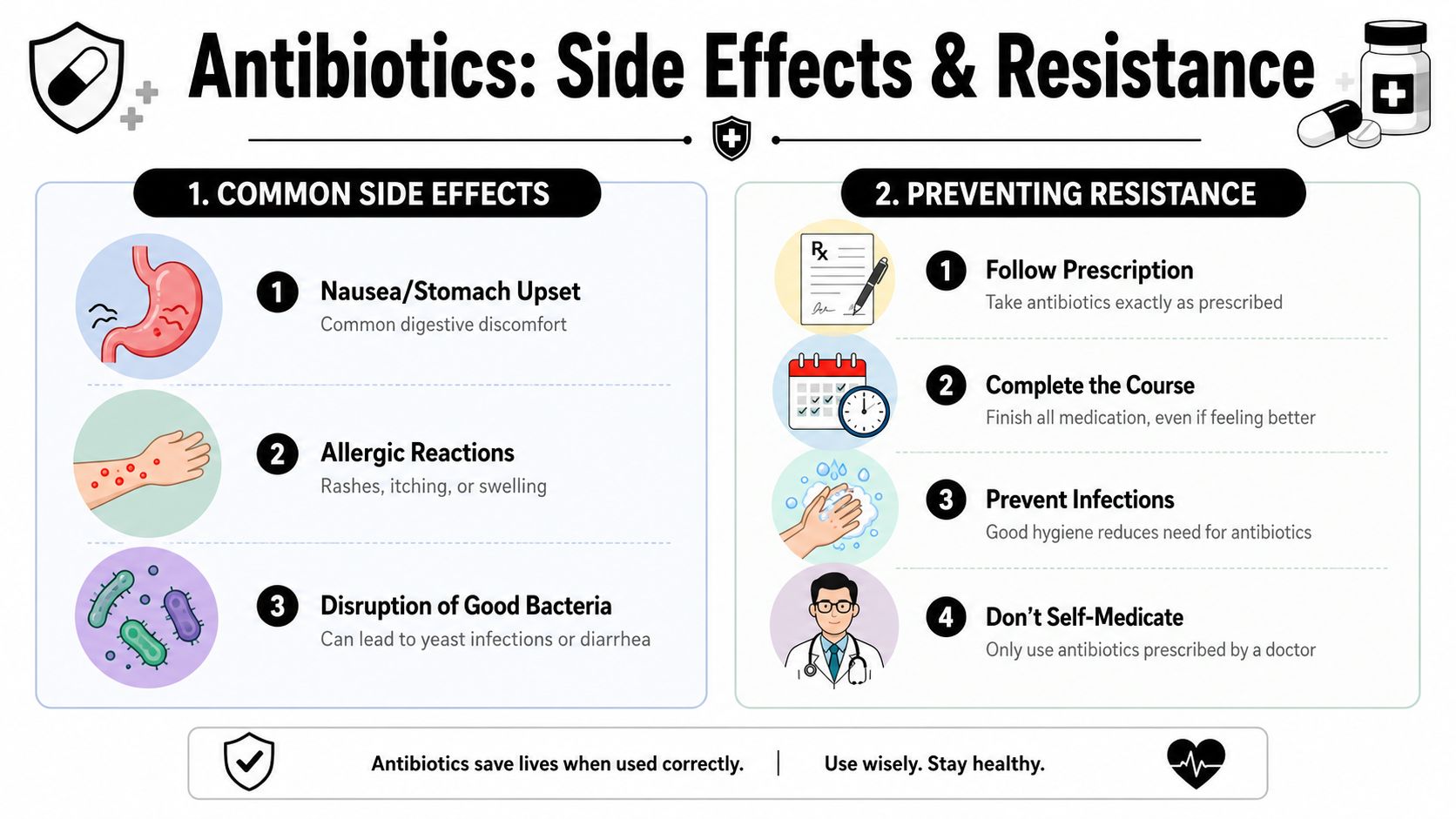
The side effects patients notice most often are digestive. Nausea, diarrhea, stomach pain, and yeast overgrowth can all show up during or after a course of antibiotics. Some reactions are more serious and need prompt attention, especially rash, trouble breathing, severe diarrhea, or symptoms that suggest an allergic response.
Those risks matter because antibiotics are support treatment, not a repair for a damaged or infected tooth. If the infection is trapped inside the tooth or around the root, a pill may help limit bacterial spread in the short term, but it does not remove dead tissue, drain pressure, or seal the tooth. The lasting fix still comes from the right dental procedure.
One of the most responsible choices a dentist can make is deciding that an antibiotic is not the right treatment.
Resistance is a real dental issue
Resistance develops when bacteria are exposed to antibiotics often enough, or inconsistently enough, to adapt and survive. That matters in dentistry because unnecessary prescriptions, leftover pills, and stopping early without guidance all make future infections harder to treat.
As noted earlier, national stewardship guidance has pushed all outpatient fields, including dentistry, to prescribe more carefully. That is good medicine. It protects the patient in front of us and helps preserve antibiotics for the cases where they are essential.
If you want a plain-language explanation of how bacteria adapt and survive, this overview of the mechanisms of antibiotic resistance is useful background.
Smart habits during treatment
Patients can lower their risk of problems by following a few practical rules:
- Take the medication exactly as prescribed: Do not skip doses, double up, or change the schedule on your own.
- Report side effects early: Severe diarrhea, rash, breathing symptoms, or worsening swelling should be reported right away.
- Do not use leftover antibiotics: A toothache needs a diagnosis, not guesswork from an old prescription.
- Keep the mouth clean while treatment is underway: Good home care helps reduce the bacterial load around the area. This explanation of how bacteria behave in the mouth gives helpful context for why plaque control still matters during treatment.
At Grand Parkway Smiles, I want patients to understand this clearly. Antibiotics can play an important role, but they are only one part of care. The goal is to identify the source of infection, treat it properly, and get you out of pain safely.
Do Not Wait When Your Toothache Is an Emergency
A dental infection can shift from miserable to dangerous faster than many people expect. If pain is building, swelling is increasing, or you feel sick overall, waiting for it to “settle down” is a bad gamble.
Signs you need urgent dental care
Call for immediate evaluation if you notice any of these:
- Facial swelling: Especially if the area looks larger over hours, not days.
- Fever or malaise: When a tooth problem starts making you feel sick overall, the infection may be extending beyond a local issue.
- Difficulty swallowing or breathing: This needs urgent attention right away.
- Severe pain that doesn't ease: Persistent, escalating pain usually means the tooth won't recover without treatment.
- A bad taste or drainage: This can signal active infection and abscess formation.
What helps and what doesn't
What helps is getting examined, getting the right imaging, and choosing definitive treatment. What doesn't help is hoping that mouthwash, leftover pills, or internet advice will solve an infection inside a tooth.
If you're anxious, say so. If you've been putting it off because you're worried about pain, say that too. A good emergency dental visit isn't just about diagnosing the infection. It's about creating a treatment plan you can get through safely and comfortably.
A spreading dental infection is not a wait-and-see problem.
If you're dealing with tooth pain, swelling, or signs of infection, Grand Parkway Smiles offers diagnosis and treatment for urgent dental problems in Katy, including definitive care such as drainage, root canal therapy, or extraction when needed. The most important step is getting the tooth evaluated quickly so the source of pain can be treated and your oral health can be restored.