When you think about advanced dental treatments, you might picture complex, lab-made materials. But what if the most powerful key to faster, better healing for a healthier smile was already inside you? That’s the simple, brilliant idea behind Platelet-Rich Fibrin (PRF), a technique that puts your body's own healing power to work, improving the results of your dental procedures and getting you back to looking and feeling your best.
What Is PRF and How Does It Help Your Dental Health?
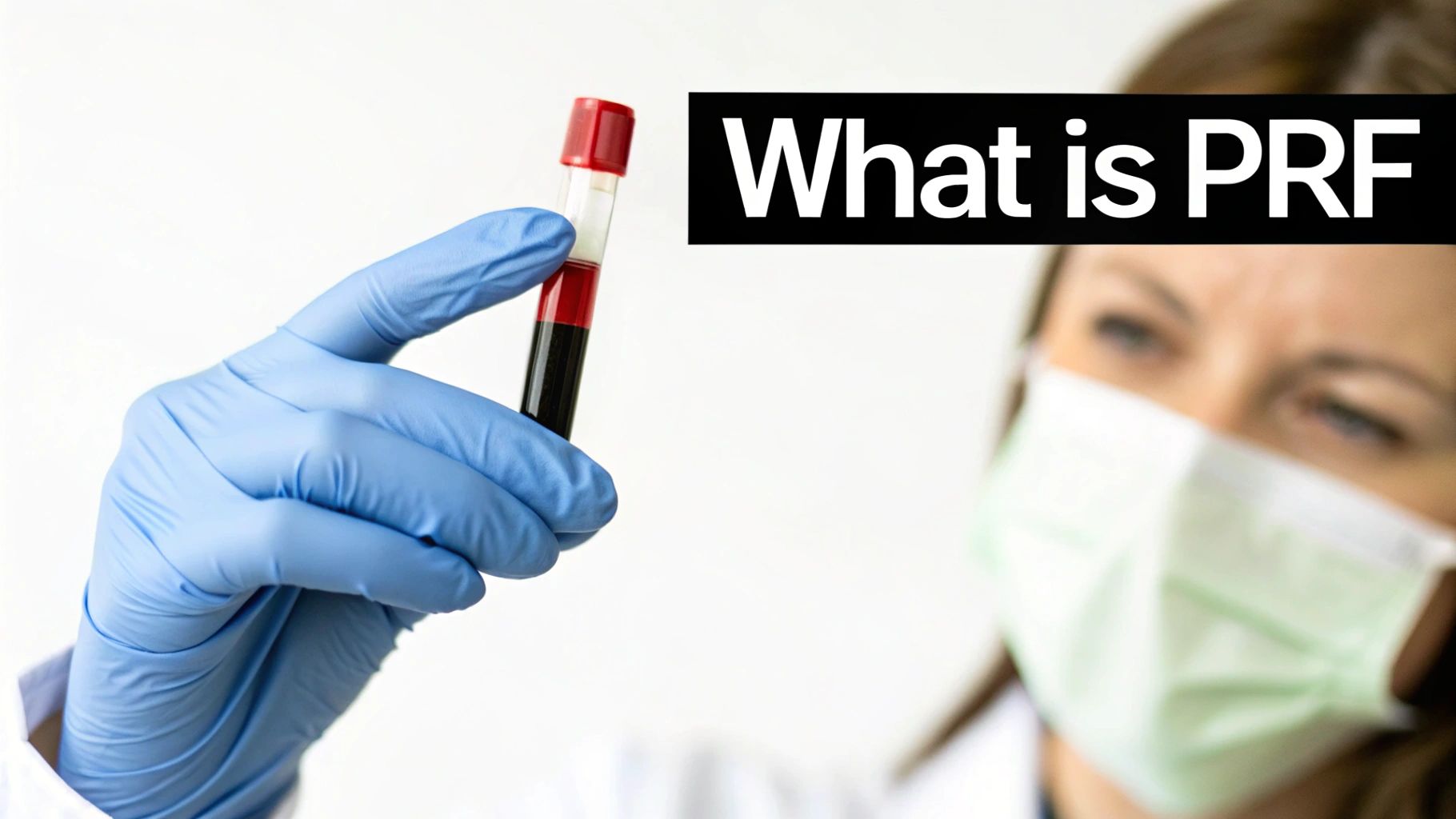
So, what is PRF in dentistry? The easiest way to think of it is as a personalized healing "band-aid" or "super patch," made from a tiny sample of your own blood. It’s a 100% natural biomaterial that gathers your body’s most potent healing agents into a stable little patch. We then place this patch right where you need it, giving your body a massive head start on recovery after surgery and helping to restore your oral health more effectively.
This isn’t some far-off concept; it’s a proven technique that has been giving patients better outcomes for years. PRF was first developed by Dr. Joseph Choukroun in France back in 2001 and has been changing the game in regenerative procedures ever since. It’s created by spinning a vial of your blood in a centrifuge at low speeds for just 10-12 minutes. No additives, no chemicals—just your own biology, concentrated. If you're curious about the science, you can explore the foundational research on PRF to see how it all started.
The Building Blocks of a Healthy Smile
At its heart, PRF acts like a biological scaffold, providing a blueprint and the raw materials for your body to repair itself. When we place it at a surgical site—like in an empty tooth socket or around a new dental implant—it creates the perfect environment for your tissues to regenerate, which is crucial for both your dental health and the final appearance of your smile.
This process works so well because of three key components working together.
- Platelets: These are your body’s first responders. When there’s an injury, they rush in to stop bleeding and, more importantly, release powerful growth factors that tell other cells it's time to start rebuilding healthy gums and bone.
- White Blood Cells (Leukocytes): Think of these as the on-site security team. They protect the area from infection, which helps keep post-op complications at bay and ensures a smooth, healthy healing process.
- Fibrin: This is a protein that forms a sticky, web-like mesh. It’s the glue that holds everything together, creating a scaffold that traps the platelets and white blood cells right where they’re needed most. This fibrin matrix also gives new tissue and bone cells a framework to grow on, supporting the foundation of your smile.
This table breaks down the three essential parts of PRF and their roles in the healing process, giving you a quick summary of how it enhances your recovery.
The Key Components of PRF at a Glance
| Component | Role in Healing | Analogy |
|---|---|---|
| Platelets | Release growth factors to signal and kickstart tissue repair. | The Foreman on a construction site, directing the crew. |
| White Blood Cells | Protect against infection and manage inflammation at the site. | The Security Guard, keeping the site safe and secure. |
| Fibrin | Forms a stable mesh to hold everything in place and support new growth. | The Scaffolding, providing the structure for the building. |
By bringing these natural healing elements together, PRF creates a more powerful and sustained healing response than your body could ever manage on its own.
It's like giving your internal repair crew a detailed blueprint and all the best tools to rebuild the site quickly, strongly, and correctly.
This focused approach is what makes PRF such a game-changer in modern dentistry. By promoting faster, stronger tissue growth, it helps ensure the long-term success of treatments like dental implants, getting you back to a healthy, confident smile in less time.
How We Create Your Custom PRF Healing Patch
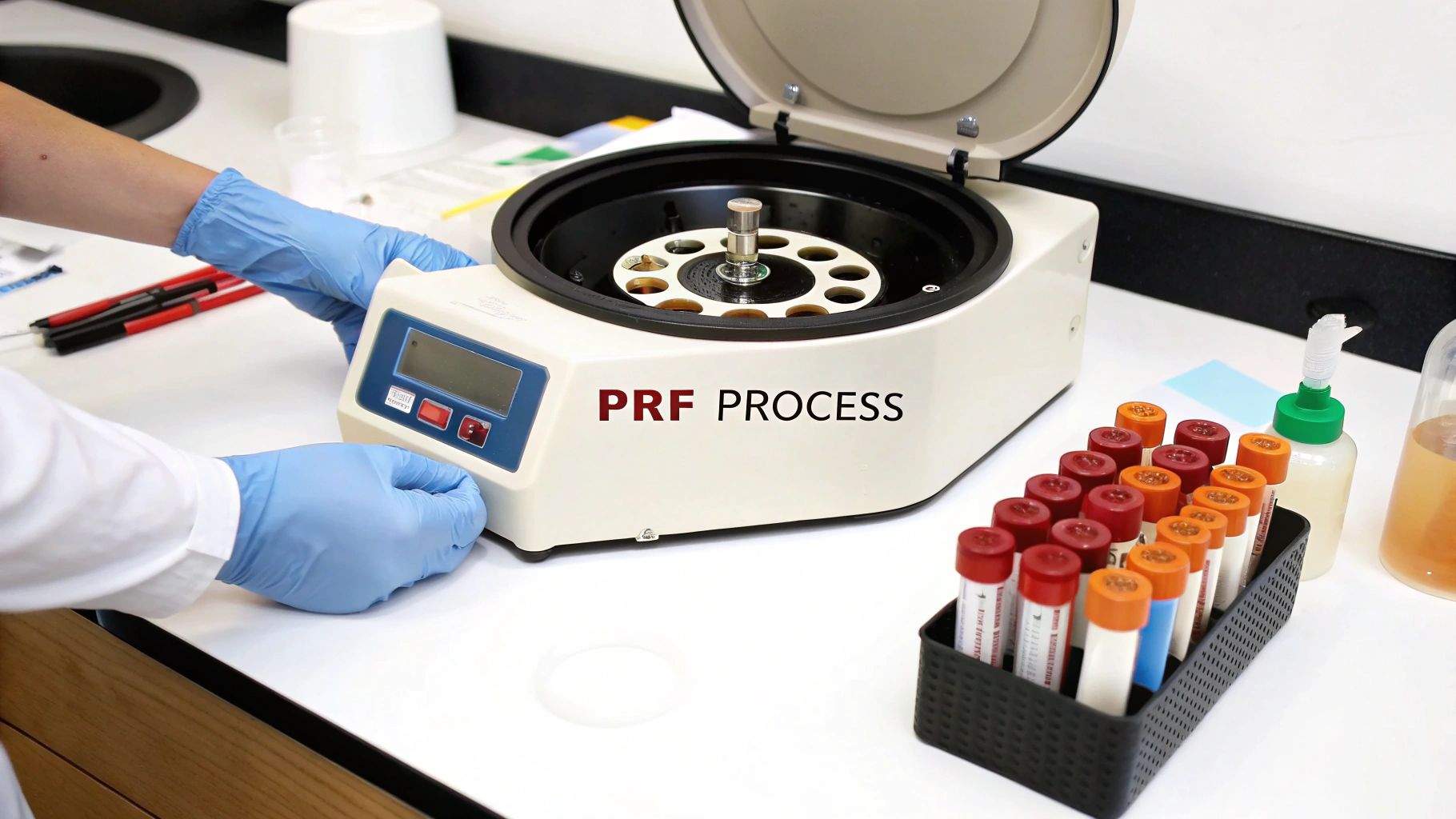
You might think creating a personalized healing material sounds complicated, but the truth is, it's incredibly simple and efficient. We handle everything right here in our office while you're relaxing in the dental chair. The entire journey, from a quick blood draw to a finished PRF patch, takes just a few minutes.
It all starts with a small blood sample, no different than what you’d give for a routine lab test. It's a quick, easy first step that gives us all the raw materials needed to kickstart your healing. That little vial holds a powerful combination of platelets, leukocytes, and fibrin—everything needed to create your unique biomaterial that will benefit your dental health.
From a Simple Blood Draw to a Powerful Healing Aid
Once we have the sample, we immediately place it into a specialized machine called a centrifuge. This device is the key to concentrating your body’s own healing power. Here’s a quick breakdown of what happens next:
- The Gentle Spin: The centrifuge spins the vial of blood at a specific, low speed. Imagine a salad spinner gently separating water from lettuce—it's a similar idea, but here we’re separating your blood into distinct layers based on their weight.
- Natural Separation: As the vial spins, the heavier red blood cells naturally sink to the bottom. The lighter plasma, platelets, and white blood cells gather in the upper layers, forming a thick, gel-like substance.
- 100% You, No Additives: The best part? This separation happens without any chemicals, anticoagulants, or foreign additives. It’s a purely mechanical process, ensuring the final product is completely natural and biocompatible, making it ideal for improving your oral health.
In just a few short minutes, this spinning process concentrates the most valuable healing components of your blood into a stable, gel-like membrane.
This resulting membrane is your personal PRF healing patch—a powerful, custom-made tool ready to be placed directly at the surgical site to speed up recovery, minimize pain, and improve your overall outcome.
This seamless, chairside procedure allows us to integrate advanced healing directly into your treatment, making procedures like extractions and dental implants a much smoother and more comfortable experience from start to finish.
How PRF Boosts Dental Implants and Surgical Results
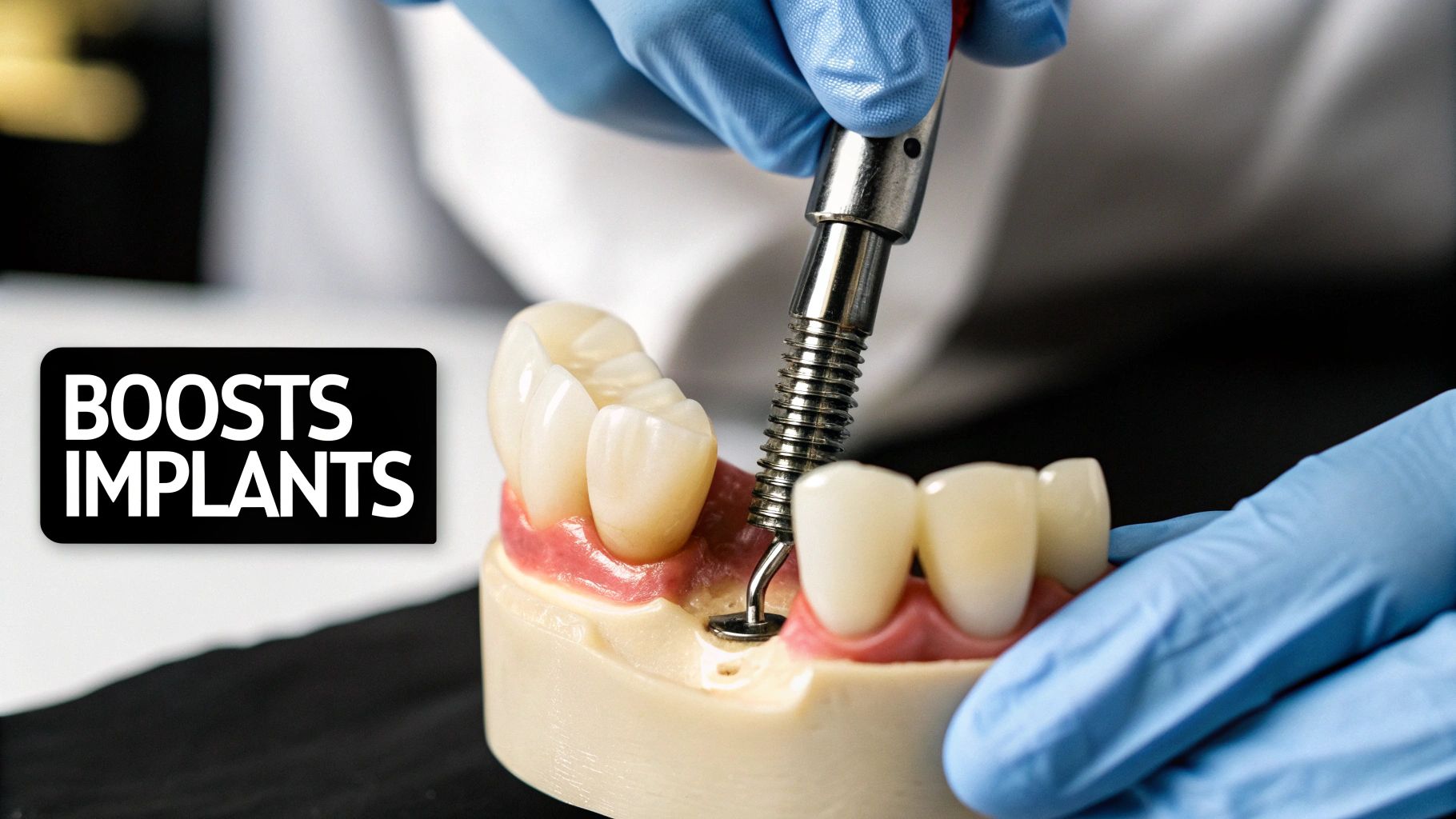
Now that we've covered what PRF is and how it’s made, let’s get into the exciting part: its incredible impact on your dental health and appearance. Think of PRF as a biological "turbo-boost" for healing. It makes surgeries safer, recoveries quicker, and the final results—like a beautiful, stable new implant—far more predictable.
When we weave PRF into our surgical work, it’s a total game-changer. From simple tooth extractions to complex bone grafting, this natural material helps us manage the surgical site in a way that promotes superior healing. What does that mean for you? Less pain, reduced swelling, and a much lower risk of complications that could affect your smile.
A Powerful Ally in Tooth Extractions
When a tooth is pulled, it leaves an empty socket in the jawbone. This little space is vulnerable to infection and painful problems like dry socket, which happens when the protective blood clot gets dislodged too early.
Placing a PRF membrane directly into the socket is like setting up a dedicated healing station right where it's needed most.
The PRF plug acts as a natural scaffold, protecting the site while slowly releasing growth factors that signal your body to build new tissue. This not only drastically reduces the risk of dry socket but also helps preserve the jawbone's height and width. Keeping that bone structure intact is absolutely essential for maintaining the shape of your face and ensuring your future smile looks natural and full.
Revolutionizing Dental Implants and Bone Grafting
For a dental implant to be successful and look fantastic, it needs a strong, healthy jawbone to anchor into. Unfortunately, bone loss is a common problem after a tooth is lost. This is where PRF truly shines, especially when we pair it with bone grafting materials to rebuild the foundation of your smile.
By mixing PRF with bone grafting particles, we create what we call "sticky bone." This bioactive mix is easier for us to handle and place, it stays put better, and it provides a rich supply of growth factors that tell your body to build new, healthy bone much faster.
This isn't just a theory; we see the results every day. The integration of PRF into implant dentistry has dramatically improved success rates, leading to healthier gums and stronger implants. Early data from oral surgery applications back in 2006 showed it cut healing times by 60% for extraction sites.
More recently, studies on sinus lifts—a common procedure for implant candidates—found that PRF-mixed grafts produced 25% greater vital bone formation at six months compared to grafts used alone. That stronger, denser bone provides a much more stable foundation for an implant, improving its long-term success and the appearance of your final restoration.
For anyone considering implants, understanding the role of PRF for dental implants in Katy, TX, can give you confidence that you're getting the best possible outcome for your smile.
Key Surgical Applications of PRF
To put it simply, PRF is a versatile tool that significantly improves our results across several key procedures, all aimed at enhancing your oral health and appearance.
- Dental Implants: PRF encourages faster osseointegration—the all-important process where the implant fuses with your jawbone, ensuring a stable, long-lasting tooth replacement.
- Bone Grafting: When mixed with grafting material, PRF supercharges bone regeneration, creating a stronger base for future implants and preserving your facial structure.
- Tooth Extractions: It helps prevent dry socket, dials down post-op pain, and preserves the bone to keep your future smile looking its best.
- Gum Surgery: We can use PRF to help regenerate gum tissue, which is a big help in treating gum recession and improving the health and appearance of your gums.
Ultimately, using PRF means a more comfortable experience for you and a better, more reliable clinical result for your smile.
The Major Benefits of Using PRF in Your Dental Care
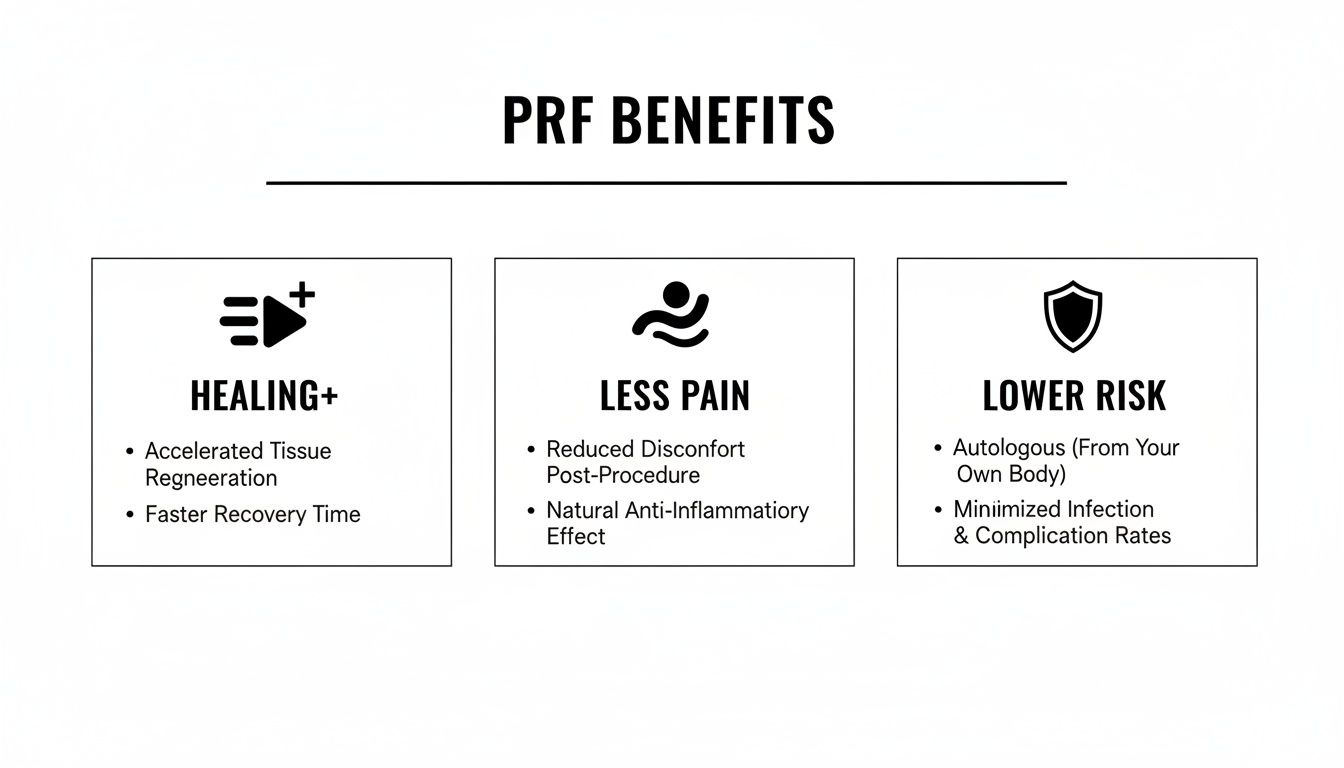
When you’re thinking about any dental procedure, two things are probably top of mind: a quick, easy recovery and results that actually last. This is exactly where Platelet-Rich Fibrin shines, taking a standard treatment and elevating the healing process. These aren't just technical benefits—they translate directly into a more comfortable and confident path back to your best smile.
The most noticeable advantage is simply accelerated healing. By taking the most powerful healing components from your own body and placing them right where they're needed, PRF essentially gives the surgical site a head start. Your gums and bone start regenerating faster, which means less downtime and a quicker return to your normal life, enjoying your beautiful smile.
More Comfort and a Lower Risk of Complications
Beyond just speed, PRF makes the recovery period much more manageable. Our patients consistently tell us they experience less post-operative pain and swelling when PRF is part of their treatment plan. The fibrin clot acts like a natural bandage over sensitive nerve endings, calming inflammation and often reducing the need for strong pain medications, so you can feel better faster.
That natural barrier does more than just soothe the area—it's also a powerful shield against infection. The white blood cells concentrated within the PRF matrix act like tiny bodyguards for the wound. This is a huge deal for procedures like tooth extractions, where keeping the site clean is critical to your oral health.
The concept of using a patient's own blood to heal isn't new, but PRF's development in the early 2000s was a major leap. It made the process fast enough to be done right in the dental chair. In oral surgery, its impact has been incredible. For instance, using PRF after wisdom teeth removal can lead to 70% less alveolar osteitis (dry socket)—a nasty, painful complication that affects thousands of people every year. You can learn how prosthodontics transforms smiles on uab.edu for more on these kinds of advancements.
Better Long-Term Results for Your Smile
Ultimately, the goal is always a successful outcome you can count on for years to come. PRF plays a huge role here by helping your body build back better, higher-quality tissue. When we use it for bone grafting, it encourages the growth of denser, stronger bone. That’s absolutely critical for making sure a dental implant has a rock-solid foundation for life. To see how this fits into the implant process, take a look at our guide on bone grafting before implants for Katy patients.
This enhanced regeneration makes the results of your procedure far more predictable. By improving the biological environment from day one, PRF helps ensure your new implant, graft, or healed gums are stable and healthy for the long haul, protecting your investment in your smile.
To wrap it up, here are the key benefits you'll experience:
- Faster Recovery: Get back on your feet and back to your life sooner with supercharged tissue and bone healing.
- Reduced Discomfort: A smoother healing period with noticeably less pain and swelling after your procedure.
- Lower Infection Risk: PRF’s natural barrier helps protect the surgical site from bacteria, safeguarding your health.
- 100% Natural and Safe: It’s made entirely from your own blood, so there’s virtually no risk of rejection or an allergic reaction.
Comparing PRF and PRP in Regenerative Dentistry
When you start looking into regenerative dental treatments, you'll almost certainly hear about two options: Platelet-Rich Fibrin (PRF) and its older cousin, Platelet-Rich Plasma (PRP). While both are designed to use your body's own healing abilities, PRF has become the clear frontrunner in modern dentistry for some very good reasons related to your dental health.
The process for both starts the same way—with a simple blood draw. But what happens next is where things get interesting, and it’s this difference in processing that completely changes the outcome. PRP is spun at a very high speed and needs chemical anticoagulants to stop the blood from clotting. PRF, on the other hand, is handled with a much slower, gentler spin and is 100% natural. There are absolutely no additives.
Sustained Healing for Better Results
The biggest game-changer with PRF is its structure. That slow-spin process allows the blood to form a dense, spongy fibrin scaffold that’s packed with platelets, white blood cells, and powerful growth factors. The best way to think of it is like a natural, time-release healing patch made just for your surgical site.
This thick matrix doesn't just dissolve in a few hours. Instead, it slowly releases its healing components over 7 to 10 days, giving your body continuous support as your bone and gums get to work regenerating. This kind of sustained healing is exactly what you need to build a rock-solid foundation for a dental implant or to ensure a smooth, comfortable recovery after a tooth extraction.
In contrast, PRP delivers its growth factors in a quick, powerful burst, but most of them are gone within a few hours. It’s helpful, but it just doesn't offer the long-term support needed for complex tissue and bone healing. This is why PRF is the superior choice for getting predictable, high-quality results for your smile.
The bottom line is that PRF creates a more complete and natural healing environment, which directly leads to a better, more comfortable experience for you from start to finish.
A Clear Choice for Modern Dental Procedures
The differences really stand out when you see them side-by-side. This comparison helps you understand the key distinctions between these two regenerative therapies and why PRF is the preferred option for achieving optimal dental health and appearance.
PRF vs PRP A Side-by-Side Comparison
| Feature | PRF (Platelet-Rich Fibrin) | PRP (Platelet-Rich Plasma) |
|---|---|---|
| Additives | None. 100% natural and biocompatible. | Requires anticoagulants to prevent clotting. |
| Growth Factors | Released slowly over 7-10 days for sustained healing. | Released quickly in a short burst (minutes to hours). |
| Cell Composition | Rich in platelets, white blood cells, and stem cells. | Primarily contains platelets with fewer other cell types. |
| Structure | Forms a strong, stable fibrin scaffold that supports tissue. | A liquid plasma that does not form a solid structure. |
For anyone wanting to create the best possible healing environment after dental surgery, PRF's advanced, all-natural approach offers clear advantages that promote better, more reliable oral health.
Your Top Questions About PRF in Dentistry
It’s completely normal to have a few questions before adding something new to your dental treatment plan. Thinking about PRF is a great move toward a much better healing process, and we want you to feel totally confident about it. To help with that, we’ve put together answers to the questions we hear most often from our patients.
We're here to tackle your concerns head-on, covering everything from safety and comfort to cost and who's a good fit. This should help you see why adding PRF is one of the smartest decisions you can make for a smooth recovery and fantastic, lasting results for your smile.
Is PRF Treatment Safe?
Absolutely. PRF is incredibly safe, making it an excellent choice for your dental health. The entire process uses a small sample of your own blood, making it 100% natural. There are no chemicals, additives, anticoagulants, or any kind of foreign material involved—ever.
Because it’s made from your own body, the risk of allergic reactions, rejection, or disease transmission is pretty much zero. We handle everything in a sterile environment, which makes PRF one of the safest and most compatible regenerative treatments you can get in dentistry today. It's simply your own healing power, concentrated and put right where you need it most.
Does the PRF Procedure Hurt?
The PRF process itself is basically painless. The only thing you'll feel is the quick pinch of a blood draw, which is no different than a routine blood test at your primary care doctor's office. It’s over in a flash.
After that moment, the rest of the preparation happens behind the scenes while you’re getting comfortable. In fact, a huge reason we use PRF is its proven power to significantly reduce post-operative pain and soreness at the surgical site. Patients tell us all the time that their recovery was more comfortable and they needed less pain medication when PRF was involved, helping them get back to feeling great sooner.
Am I a Good Candidate for PRF Therapy?
If you're having any kind of surgical dental procedure, chances are you're an excellent candidate for PRF. It’s a game-changer for any treatment that involves healing bone or soft tissue, ultimately leading to a healthier smile.
Here are a few situations where PRF really shines:
- Tooth Extractions: It helps prevent painful dry sockets and keeps your jawbone strong, which is vital for your future appearance.
- Dental Implants: It speeds up the process of the implant bonding with your bone, creating a rock-solid foundation for a beautiful new tooth.
- Bone Grafting: PRF supercharges the growth of new, healthy bone where you need it, supporting the structure of your face and smile.
- Gum Surgery: It helps soft tissues heal faster and better for improved gum health and appearance.
Since it’s your own biological material, it works well for just about everyone. The best way to know for sure is to chat with your dentist. We can map out exactly how to fit PRF into your treatment to get you the best possible outcome.
What Does PRF Cost and Does Insurance Cover It?
The cost for PRF is usually a separate fee on top of your main dental procedure. While it's often an out-of-pocket expense, most patients see it as a very affordable and worthwhile investment in their dental health and the final look of their smile.
By minimizing the risk of infection or implant failure, PRF can actually save you money and time in the long run.
Right now, most dental insurance plans don't cover PRF as a separate item. But our team is dedicated to making advanced care fit your budget. We offer flexible payment options and financing plans to help you get the best healing experience possible.
At Grand Parkway Smiles, we believe in using proven methods to ensure your comfort and deliver exceptional results for your smile. Incorporating PRF into our surgical treatments allows us to support your body’s natural healing power for a faster, smoother recovery. If you're ready to learn more about how we can improve your dental implant or surgical experience, schedule a consultation with our expert team today at https://dentistkatytx.com.