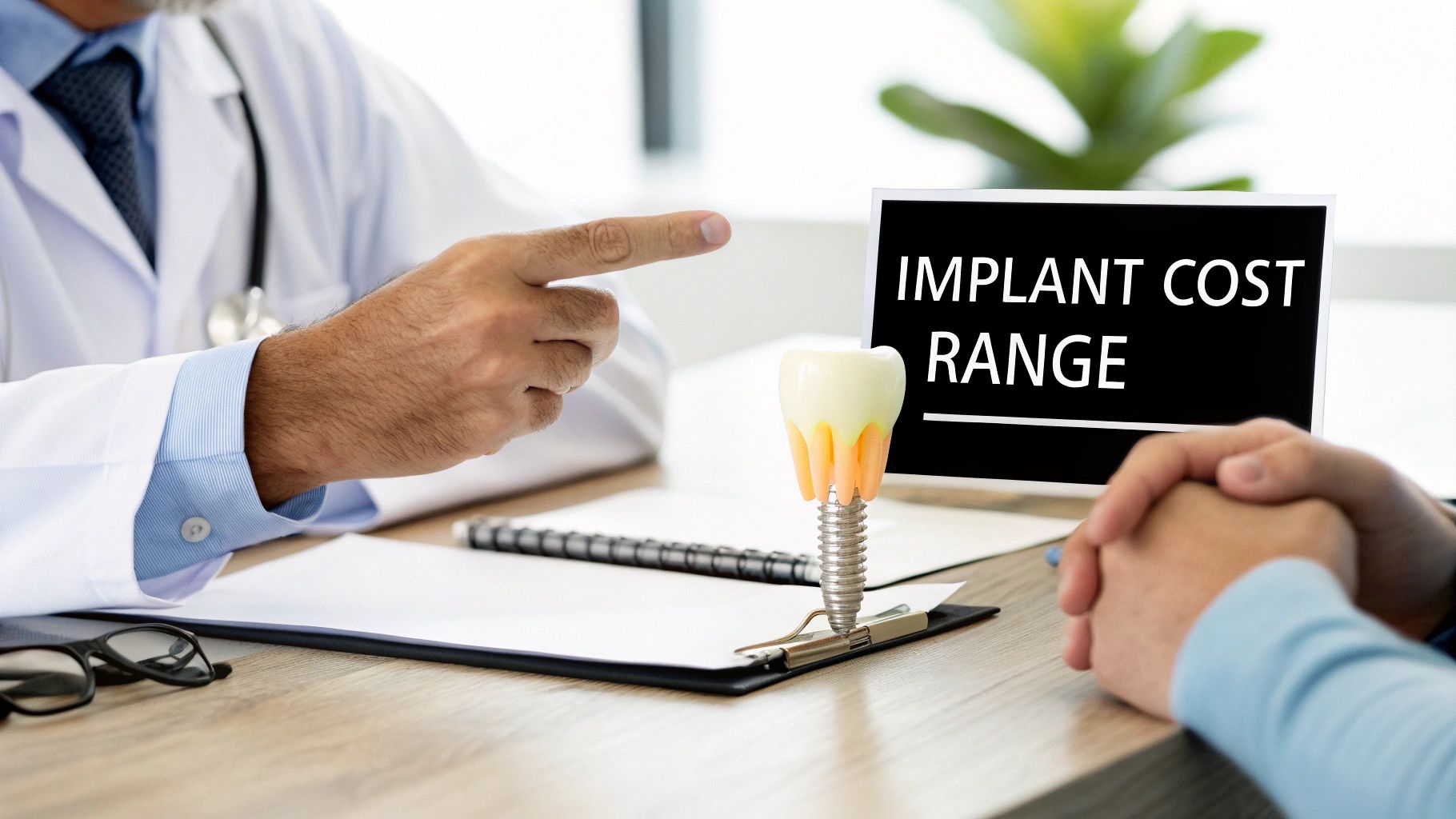
Trying to pin down the cost of a dental implant can feel like you're chasing a moving target, but for a single tooth replacement, you're typically looking at a range of $3,000 to $5,000. That number isn't just for the tooth you see—it covers the whole process, from the surgical placement of the new "root" to the final, custom-crafted crown that brings your smile back to life. Understanding this investment is the first step toward reclaiming your oral health and confidence.
Investing in Your Smile and Health
Losing a tooth isn't just a cosmetic problem. It impacts how you chew, how you speak, and over time, it can even alter the shape of your face by allowing the jawbone to deteriorate. A dental implant is considered the gold standard for tooth replacement because it functions just like a natural tooth root. It provides a solid foundation that keeps your jawbone strong, prevents neighboring teeth from shifting out of place, and restores your smile's natural appearance. This is more than a quick fix; it's a profound investment in your long-term health and self-esteem.
Unlike bridges or dentures that often need to be replaced or adjusted every few years, a well-maintained dental implant can last a lifetime. When you view it through that lens, it becomes a wise financial decision, saving you from the recurring costs and potential dental issues associated with other tooth replacement options. The benefit of a permanent, beautiful smile that functions perfectly is immeasurable.
A Quick Look at the Numbers
So, what exactly are you investing in? The total cost of a dental implant is broken down into three core parts. Each component has a specific job in rebuilding your tooth from the jawbone up, ensuring the final result looks, feels, and functions just like the real thing.
To make it easier to see how it all adds up, here’s a simple table that itemizes each component.
At-a-Glance Breakdown of Single Dental Implant Costs
| Component or Service | Average National Cost Range | What It Covers |
|---|---|---|
| Implant Post | $1,000 – $3,000 | The titanium screw surgically placed into the jawbone, acting as the new tooth root. |
| Abutment | $300 – $600 | The connector piece that attaches the crown securely to the implant post. |
| Crown | $1,000 – $2,000 | The custom-made prosthetic tooth that is visible and restores your smile's function and appearance. |
This breakdown shows that you're not just buying a "tooth," but investing in a complete, multi-part system designed for durability and a seamless, natural appearance.
Understanding the Investment
That $3,000 to $5,000 price tag reflects the advanced materials and meticulous care that go into the procedure. This isn't just about popping in a fake tooth; it's a surgical process that restores your oral health. The cost covers high-grade materials like titanium, which is so effective it holds a 93% market share for implants worldwide. It also accounts for the precision technology we use, like 3D imaging and digital planning, to ensure a perfect fit and a beautiful outcome. For a deeper dive, you can learn more about how dental implant costs are determined on nuviasmiles.com.
Think of a dental implant as more than just a replacement tooth. It's a long-term solution designed to protect your jawbone, preserve your facial aesthetics, and restore full function for eating and speaking with confidence.
Now that you have a baseline for the cost, we'll get into the specific services included in this price and the different factors that can cause your final cost to go up or down.
Deconstructing the Price: What Are You Paying For?
When you get a quote for a dental implant, it's natural to focus on the final number. But understanding what that price actually covers shows the real value of the investment you're making in your health and smile. Think of it like buying a custom-built car; you aren't just paying for the metal frame, but for the precision engineering, high-performance parts, and expert assembly that guarantee it runs perfectly and looks great for years.
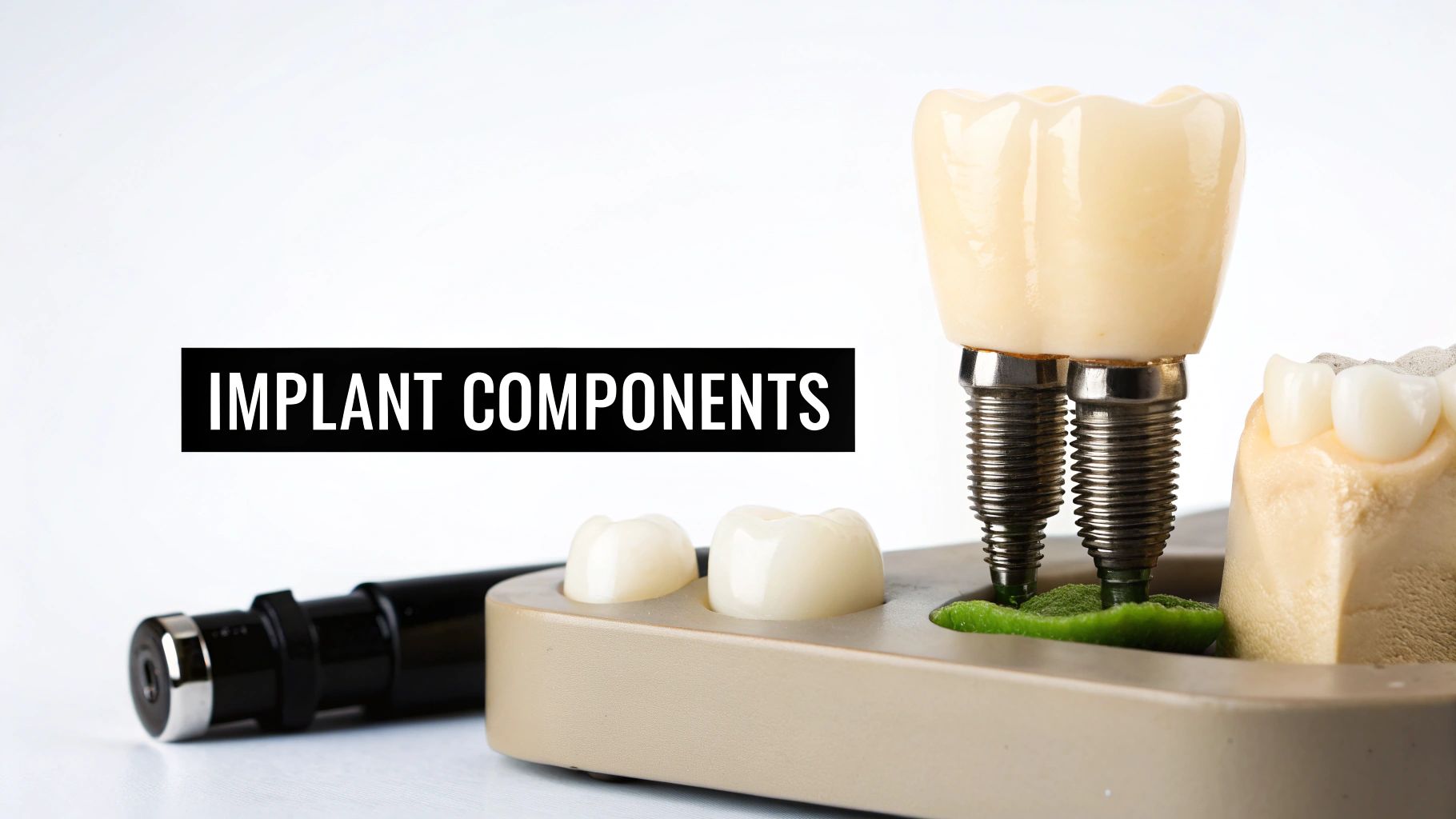
The price tag on an implant bundles together highly specialized parts and expert services, and every single one is critical to restoring your smile. This isn’t some off-the-shelf product. It’s a permanent, biocompatible solution designed to become a part of your body and function just like a natural tooth.
The Three Core Components of an Implant
A complete dental implant is a sophisticated three-part system. Each piece is meticulously engineered to work in harmony, giving you a stable, functional, and beautiful tooth replacement that safeguards your oral health for the long haul.
-
The Implant Post: This is the anchor for your new tooth. Made from biocompatible titanium, this small, screw-like post is placed surgically into your jawbone. It acts as a new tooth root, stimulating the bone and preventing the bone loss that always happens after losing a tooth. This is the secret to preserving your facial structure and avoiding that sunken look down the road.
-
The Abutment: Think of the abutment as the connector piece. It's a small but essential part that attaches securely to the top of the implant post after it has fused with your jaw. This component sits right at the gumline, creating a solid base for your beautiful new crown.
-
The Crown: This is the part everyone sees—the tooth-shaped restoration. We custom-craft the crown from materials like porcelain or zirconia so it perfectly matches the color, shape, and size of your other teeth. It attaches to the abutment, completing your smile and giving you back the ability to chew, speak, and laugh with total confidence.
A dental implant is the only tooth replacement option that actively preserves and stimulates the natural jawbone, helping to maintain your facial profile and prevent future dental health complications. This benefit alone makes it a superior investment in your long-term well-being.
Essential Services Included in Your Cost
Beyond the physical hardware, your implant cost also covers the expert services needed to guarantee a successful and lasting outcome. These steps are fundamental to creating a personalized plan that restores both the function and the beauty of your smile.
1. Initial Consultation and Planning
Your journey starts with a detailed exam. We'll take a close look at your oral health, talk about your aesthetic goals, and determine if you're a good candidate for implants. This is the crucial first step where we build a treatment plan just for you.
2. Advanced 3D Imaging
Precision is everything for a beautiful result. We use advanced Cone Beam CT (CBCT) scans to create a detailed 3D map of your jawbone, nerves, and surrounding structures. This digital blueprint lets us plan the implant's exact placement for the best possible stability and safety, minimizing risks and ensuring a predictable, natural-looking outcome.
3. The Surgical Procedure
This fee covers the surgical placement of the titanium implant post by a skilled clinician. It includes the sterile environment, the professional team, and the expertise needed to perform the procedure safely and effectively. Your comfort and health are our top priorities from start to finish.
Preparatory Procedures That Can Shape Your Final Cost
Sometimes, before we can even place a dental implant, we have to prepare the area to ensure you get a successful, long-lasting result. It's a lot like building a house—you wouldn't dream of putting up walls on a weak, shifting plot of land. You’d first invest in a solid foundation, and the very same principle applies right here in your jawbone.
These preparatory steps aren't just "extra fees"; they're critical investments in the health and stability of your new tooth. They give your implant the best possible chance to integrate with your body, function perfectly, and keep your smile looking natural for decades. Trying to cut corners here can unfortunately lead to implant failure and much bigger costs down the road.
Bone Grafting: Building a Strong Foundation
One of the most common prep procedures we perform is a bone graft. It's a simple concept: after a tooth is lost, the jawbone in that spot naturally starts to shrink and lose its density. Without a tooth root to stimulate it, the bone resorbs, which can leave it too thin or soft to securely anchor a titanium implant.
A bone graft fixes this by rebuilding what was lost. We place special grafting material into the area, which acts like a scaffold that encourages your own body to grow new, strong bone. This creates that solid, dense foundation an implant needs to be successful.
- Why It's Needed: To restore jawbone height and width, especially if a tooth has been missing for a long time.
- The Benefit: Ensures the implant is completely surrounded by healthy bone for maximum stability.
- Impact on Appearance: A strong jawbone supports your facial muscles, preventing that sunken look that can happen after tooth loss and maintaining your natural facial contours.
For many of our patients, this procedure is the key to making sure their implant investment is a secure one.
Sinus Lifts: Creating Space in the Upper Jaw
When we’re replacing a missing tooth in the upper back part of your jaw, we sometimes run into a unique challenge: the maxillary sinus. Think of it as a small, air-filled cavity right above your upper molars. If the bone between the sinus and your mouth is too thin, placing an implant could actually puncture the sinus membrane.
A sinus lift (also called sinus augmentation) is a specialized type of bone graft designed for this exact situation. The procedure involves gently lifting that sinus membrane and placing bone graft material underneath. This builds up the bone height, creating enough room to place an implant safely and securely without getting anywhere near the sinus. It's an essential step for restoring function and health to the upper jaw.
Investing in preparatory procedures like a bone graft or sinus lift isn't just about making the implant placement possible—it's about protecting the final result. A strong foundation is the best insurance you can have for a healthy, functional smile that lasts a lifetime.
Sedation Options: Ensuring Your Comfort
Dental anxiety is completely real, and your comfort is a non-negotiable part of the process for us. For surgical procedures like placing an implant or performing a graft, sedation dentistry allows you to be totally relaxed and pain-free, making the entire experience positive. The cost will depend on the type you choose:
- Nitrous Oxide: Often called "laughing gas," this provides a light, calming sensation.
- Oral Sedation: A pill you take before your appointment that leaves you deeply relaxed but still conscious.
- IV Sedation: Administered through the bloodstream for a much deeper level of sedation. Patients often have little to no memory of the procedure afterward.
The need for these treatments really varies from person to person. Statistics show that up to 30% of cases may need additional procedures like bone grafts due to bone loss, which can add anywhere from $500 to $5,000 to the total cost. When you're looking at extensive work, like the All-on-4 treatments we offer at Grand Parkway Smiles, the investment can range from $15,000 to $35,000 per arch. While that's a significant number, it's often a more economical path than replacing every single tooth individually. You can discover more insights about dental implant cost factors at nuviasmiles.com.
Comparing The Long-Term Value Of Implants, Bridges, And Dentures
When you start looking into the cost of a dental implant, it's natural to get a little sticker shock. It’s easy to put that number next to the seemingly cheaper prices of dental bridges or traditional dentures and think the choice is obvious.
But that initial price tag doesn't tell the whole story. The real value isn't just about the upfront cost; it's about long-term performance, durability, and how each option impacts your health and appearance down the road.
Think of it like buying a car. You could grab a cheap, high-mileage clunker that gets you off the lot for a low price. But over the next few years, you're constantly sinking money into repairs, it guzzles gas, and it eventually needs to be replaced. A quality vehicle costs more initially, but it provides years of reliable performance with minimal fuss, making it the smarter, more enjoyable investment in the long run. Dental restorations work the same way.
The Hidden Costs Of Bridges And Dentures
While dental bridges and dentures look more affordable at first, they often come with a cycle of replacement and can even cause new dental problems that add to your costs over time.
A dental bridge, for instance, requires grinding down two perfectly healthy teeth on either side of the gap. This is an irreversible process that weakens these anchor teeth, making them prime targets for future decay, root canals, or even extraction. On top of that, bridges typically need to be completely replaced every 10-15 years, and you're right back where you started, paying all over again.
Traditional dentures have their own set of long-term issues. Because they just sit on top of your gums, they do nothing to stop the jawbone from shrinking away after a tooth is lost. This inevitable bone loss changes your facial structure and causes the dentures to become progressively looser, requiring frequent adjustments, relines, and a full replacement every 5-7 years.
Why Implants Are The Superior Long-Term Investment
Dental implants are different. They are designed from the ground up to be a permanent solution. By fusing directly with your jawbone, the implant becomes a true replacement for your natural tooth root, creating a stable foundation that protects your oral health and smile for life.
An implant is the only tooth replacement that preserves and stimulates the jawbone, preventing bone loss and protecting your natural facial contours. This unique benefit is a crucial investment in your long-term health and appearance.
This one fundamental difference is what makes implants such a powerful investment. They don't damage healthy teeth, they won't slip or click when you talk, and you care for them just like your natural teeth, allowing you to enjoy a completely normal and confident life.
The infographic below shows some of the preparatory steps, like bone grafts and sinus lifts, that are sometimes needed to guarantee this kind of long-term success.
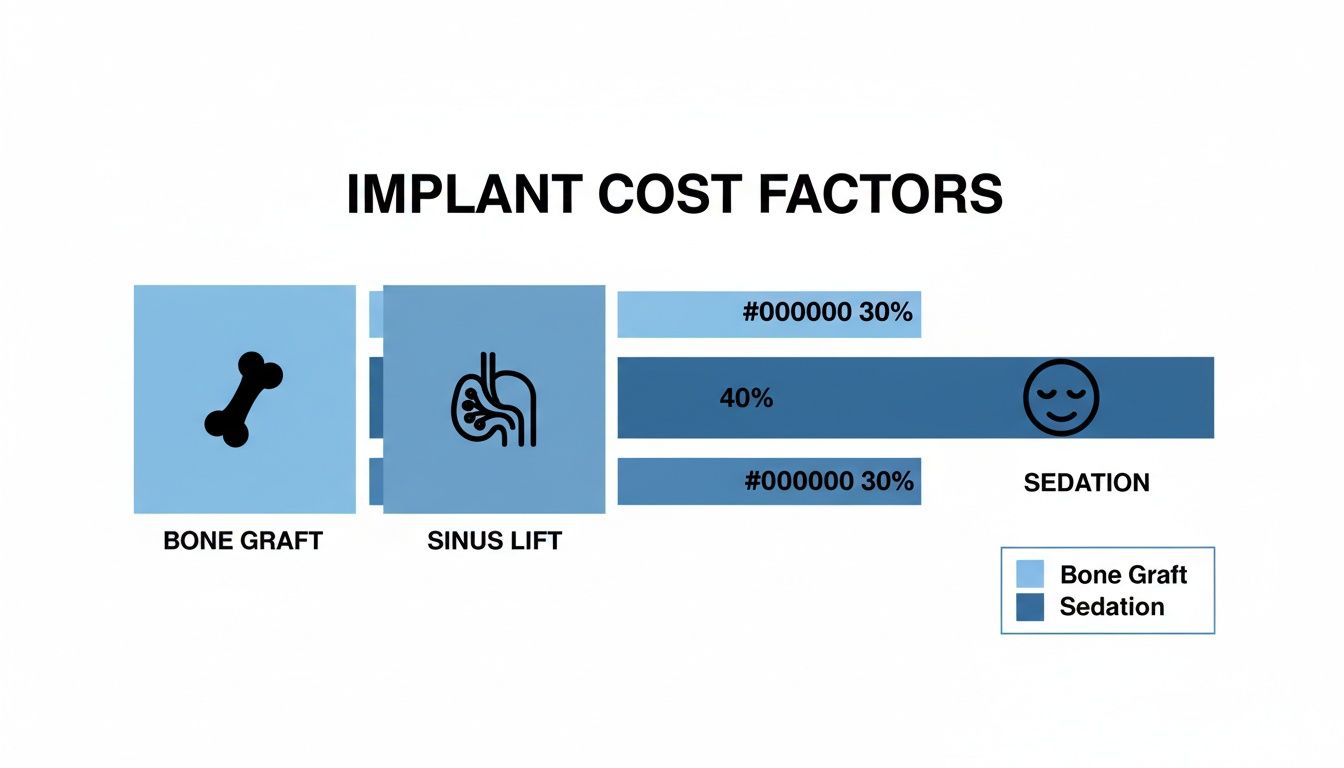
These treatments build the solid foundation an implant needs to last a lifetime, reinforcing its value as a truly permanent solution for your smile.
To really see the difference, let's put these three options side-by-side.
Cost and Value Comparison: Implants vs. Bridges vs. Dentures
This table breaks down not just the initial cost but the long-term implications for your health and your wallet. It's about seeing the whole picture.
| Feature | Dental Implants | Dental Bridge | Traditional Dentures |
|---|---|---|---|
| Initial Cost | Higher ($3,000 – $6,500) | Moderate ($2,000 – $5,000) | Lowest ($600 – $4,000) |
| Lifespan | 20+ years, potentially a lifetime | 10-15 years before replacement is needed | 5-7 years before replacement is needed |
| Impact on Jawbone | Preserves and stimulates bone, preventing bone loss and changes to facial structure | Does not prevent bone loss under the gap, which can lead to a sunken appearance over time | Accelerates bone loss due to pressure on the gums, leading to a poor fit and facial changes |
| Impact on Other Teeth | No impact. Standalone solution that protects adjacent teeth. | Damages healthy teeth. Requires grinding down two adjacent teeth to support the bridge. | Can cause wear on any remaining natural teeth used for support. |
| Function & Feel | Feels and functions just like a natural tooth. No food restrictions. | Stable, but can be difficult to clean under. May have some food restrictions. | Can be unstable, slip while talking or eating. Often requires adhesives and has significant dietary limits. |
| Long-Term Value | Excellent. High upfront cost but minimal future costs. Prevents other dental issues and preserves your smile. | Fair. Lower initial cost, but requires repeated replacement and can lead to future problems with anchor teeth. | Poor. Requires frequent relining and replacement. Does not solve the underlying issue of bone loss. |
As you can see, the initial savings from bridges or dentures often fade away due to the ongoing costs of replacement and the need to fix secondary problems they can create.
The impressive durability and health benefits of implants translate directly into financial savings. With success rates of 95-98% and the potential to last for over 20 years, dental implants are often 3 to 5 times more cost-effective over a patient's lifetime compared to bridges or dentures. This is why implants are considered the gold standard in modern dentistry.
Choosing a dental implant isn't just about filling a gap; it's about restoring your smile's health, function, and appearance for good. For a deeper look at these options, check out our comprehensive guide comparing implants and dentures. This approach helps you avoid the endless cycle of replacements and makes the most financial sense for your future.
Key Factors That Influence Your Final Investment
Getting a handle on why dental implant costs aren't a one-size-fits-all price is the first step. The final number you see isn't just pulled out of thin air; it’s a reflection of the custom care, high-quality materials, and clinical skill needed to bring your smile back to life. Think of it like buying a custom-tailored suit versus one off the rack—the final price depends on the tailor's skill, the fabric quality, and how complex the design is.
Just like that suit, a dental implant is designed for a perfect fit and function that lasts a lifetime. Several key variables come together to determine your specific cost, making sure the final result is a perfect match for your health needs and what you want your smile to look like. Each piece of the puzzle plays a critical role in creating a durable, natural-looking tooth that lets you eat, talk, and smile with confidence again.
Material Selection: Titanium vs. Zirconia
The material used for the implant post itself is a big piece of the cost puzzle. Each option comes with its own set of benefits for your long-term health and appearance.
-
Titanium: This is the go-to standard, and for good reason. Titanium is incredibly strong, built to last, and biocompatible—meaning it fuses exceptionally well with your jawbone. It has a long, proven track record of success, making it a reliable and often more budget-friendly choice.
-
Zirconia: As a high-tech ceramic, zirconia is a fantastic metal-free alternative with some serious cosmetic advantages. Its natural tooth color means there's zero chance of a dark line showing through the gums, which can sometimes happen with titanium implants, especially if you have thin gum tissue. While it's typically priced a bit higher, zirconia is a top-tier choice for restoring front teeth where aesthetics are paramount.
Deciding between them is really a conversation about balancing function, aesthetics, and your budget. Both are engineered to give your new tooth a rock-solid foundation, protecting your jawbone and overall oral health for the long haul.
The Role of Expertise and Technology
The skill of the dentist placing your implant and the tools they use have a direct impact on both the success and the cost of your procedure. A highly experienced surgeon who specializes in implant dentistry might have higher fees, but that expertise is priceless. It usually means a smoother procedure, fewer complications, and a beautiful final result you can count on.
Likewise, practices like ours at Grand Parkway Smiles that invest in advanced technology are simply providing a higher standard of care.
Using state-of-the-art tools like 3D CBCT imaging and digitally guided surgery isn't about padding the bill. It's about ensuring absolute precision, making the procedure safer, and creating a final result that looks, feels, and functions just like a natural tooth for years to come.
This commitment to excellence protects your investment and ensures your new smile is built to last.
Complexity of Your Case and Geographic Location
No two mouths are the same, and the unique details of your situation will definitely shape the final cost. Things like the exact location of the missing tooth, the specific angle needed for placement, and whether you need any prep work (like a bone graft) will all factor into the overall investment.
Where you live also plays a part. The cost of running a top-tier dental practice in a major metro area like Houston or Katy is naturally different than in a small rural town. This is a big reason why dental tourism has gained popularity. A premium implant might run you $3,500-$5,000 in the U.S. but just a fraction of that in other countries. You can dig into these global dental implant pricing trends on nccconline.org for more detail. While traveling for care is an option, getting treatment locally ensures you have consistent follow-up and the highest standard of care, which is absolutely crucial for long-term success.
Making Your New Smile Affordable in Houston
Figuring out the cost of a dental implant is the first step. The next, and just as important, is figuring out how to fit this incredible investment into your family's budget. A full, healthy smile does wonders for your confidence and protects your long-term oral health, and we’re here to make sure that’s an achievable goal for our neighbors in Houston and Katy. Financial concerns should never be the final roadblock to getting your smile and your life back.
Luckily, you've got several practical ways to make the procedure affordable. We believe in offering clear, simple solutions to help you get started with your treatment. Our team is fantastic at helping patients navigate the financial side of things without any stress.
Demystifying Dental Insurance Coverage
Dental insurance can feel like a maze, but our team is here to be your guide. For years, many insurance plans treated implants as purely cosmetic, but that’s finally starting to change. More and more providers are recognizing just how essential they are for preserving your overall dental health, and that means coverage is becoming much more common.
We work with most PPO plans and will take care of the entire claims process for you. Our experts will dig into your benefits and file all the paperwork needed to get you the maximum reimbursement your policy allows. This hands-on approach helps shrink your out-of-pocket costs from day one.
Flexible Financing and In-House Plans
Insurance isn't the only tool in the toolbox. We also offer other ways to make the cost of a dental implant manageable. We've partnered with trusted financing companies like CareCredit, which offer flexible, low-interest payment plans. These programs let you break down the total cost into smaller monthly payments that won't strain your budget.
A restored smile is not just an aesthetic upgrade; it's a vital investment in your ability to eat, speak, and engage with the world confidently. We are committed to finding a financial solution that works for you, so nothing stands in the way of your health and well-being.
We also have our own in-house savings plan. It’s an option designed just for our patients, offering discounts on many treatments, including dental implants. It’s a great choice for anyone without traditional dental insurance, making sure everyone has access to the best care possible.
Our main goal is to remove financial barriers. We want you to feel confident and ready as you take this important step toward a healthier, more beautiful smile. For a deeper dive into all these options, check out our guide on understanding dental insurance and financing at Grand Parkway Smiles. We're here to help you find the best path forward.
Common Questions We Hear About Dental Implant Costs
When you’re thinking about a big investment in your health and smile, it’s completely normal to have questions. The financial side of things is usually right at the top of the list for our patients, so let’s tackle some of the most common questions we hear to help you feel confident about your decision.
Is the High Cost of a Dental Implant Really Worth It?
This is probably the number one question we get, and the answer is a resounding yes. Think of it this way: bridges and dentures often need to be replaced every 5 to 15 years, which means you’re paying for them over and over again. An implant, on the other hand, is designed to be a one-time investment that can last a lifetime.
But the value goes deeper than that. An implant is the only solution that protects your jawbone from deteriorating, which helps preserve your facial structure and youthful appearance. It’s about more than just filling a gap—it’s about safeguarding your long-term health, function, and aesthetics.
Why Do Implant Prices Vary So Much Between Dentists?
It’s true, you’ll see a wide range of prices out there. The final cost isn't just for a "tooth"; it's a reflection of the unique combination of materials, technology, and the surgeon's expertise involved in your specific treatment.
A highly experienced oral surgeon using top-tier materials and advanced 3D imaging for pinpoint accuracy will naturally have a different fee than a general dentist using more basic methods. That variation means you're investing in a certain level of quality, predictability, and safety that's customized to give you the best possible result.
Investing in a dental implant is more than just buying a replacement tooth; it's a permanent restoration of your oral health, function, and confidence. The long-term durability and health benefits make it one of the most cost-effective and life-enhancing decisions you can make for your smile.
Does Insurance Help Pay for Full-Arch Solutions Like All-on-4?
For those needing a full smile makeover, this is a huge concern. The good news is that dental insurance is catching up. More and more plans are recognizing that implants are medically necessary for preserving jaw health and are starting to offer partial coverage.
Our team is fantastic at digging into your plan to maximize every last benefit you’re entitled to. For any remaining balance, we can walk you through options like third-party financing or our in-house plans to make it manageable.
This growing acceptance isn't just local—it's a global trend. The dental implant market is currently valued at $18.19 billion and is expected to hit $30.03 billion by 2032. This boom is driven by a greater focus on oral health and an aging population that wants permanent, beautiful solutions. You can read more about these dental market projections on researchandmarkets.com. It just goes to show that investing in a healthy, permanent smile is quickly becoming the worldwide standard of care.
Ready to find out what a life-changing dental implant would cost for you? At Grand Parkway Smiles, we provide clear, personalized treatment plans to restore your smile and confidence. Schedule your consultation today to take the first step. https://dentistkatytx.com