When a tooth gets knocked out, the clock starts ticking—fast. Acting correctly can save your natural smile and preserve your long-term dental health. The single most important thing you can do is find the tooth, handle it only by the crown (the part you chew with), and get to an emergency dentist within one hour.
If it’s dirty, give it a gentle rinse, but don't scrub it. Try to put it back in the socket right away. If you can't, storing it in a small container of cold milk is the next best thing to protect it.
Your First Actions in a Dental Emergency
Seeing a tooth on the ground is a shocking moment, but your actions in the next few minutes can mean the difference between saving your natural tooth and facing more complex dental work. This isn't just another dental problem; it's a true, time-sensitive emergency where quick action directly impacts your oral health and appearance.
Over 5 million teeth are knocked out every year in the U.S. from sports injuries, falls, and other accidents. Knowing exactly what to do can save your natural smile and help you avoid much more complex and expensive procedures like bridges or implants down the road. For a broader look at handling dental crises, you can check out our detailed guide on things to do in a dental emergency.
Locate and Handle the Tooth with Care
It’s easy to panic, but try to stay calm and focus. The first step is to find the tooth, which is the key to restoring your smile.
Once you have it, pick it up by the crown—the whiter, chewing surface. It is absolutely critical that you avoid touching the root, which is the pointed end that sits in your jaw. That root is covered in tiny, living tissues that are essential for it to reattach successfully. If you touch, wipe, or scrub the root, you could permanently damage those cells, making it impossible to save the tooth.
If there's dirt on the tooth, a quick and gentle rinse with cold milk or a saline solution is all it needs. Never use tap water, soap, or any other cleaners. They're too harsh and can kill the fragile cells on the root. The entire goal here is to keep those cells alive to give your tooth the best chance of survival.
The first 60 minutes after a tooth is knocked out is what we call the "golden hour." Your chances of successfully replanting the tooth and preserving your smile drop dramatically once that hour is up because the delicate cells on the root start to die off.
Preserve the Tooth Immediately
After you've carefully handled the tooth, you need to keep it moist to maintain its health. The absolute best place for it is right back where it came from—in the socket.
Gently try to guide it back into place. If it slides in, have the person bite down on a clean piece of gauze or cloth to hold it steady. This not only protects the tooth but also helps maintain the natural alignment of your bite.
If you can't get it back in the socket, proper storage is the next priority:
- Place it in a small container or cup filled with cold milk.
- If you have one, use a dedicated tooth preservation kit like Save-A-Tooth.
- As a last resort, the person can hold the tooth in their cheek to keep it moist with their own saliva. Just be careful not to swallow it!
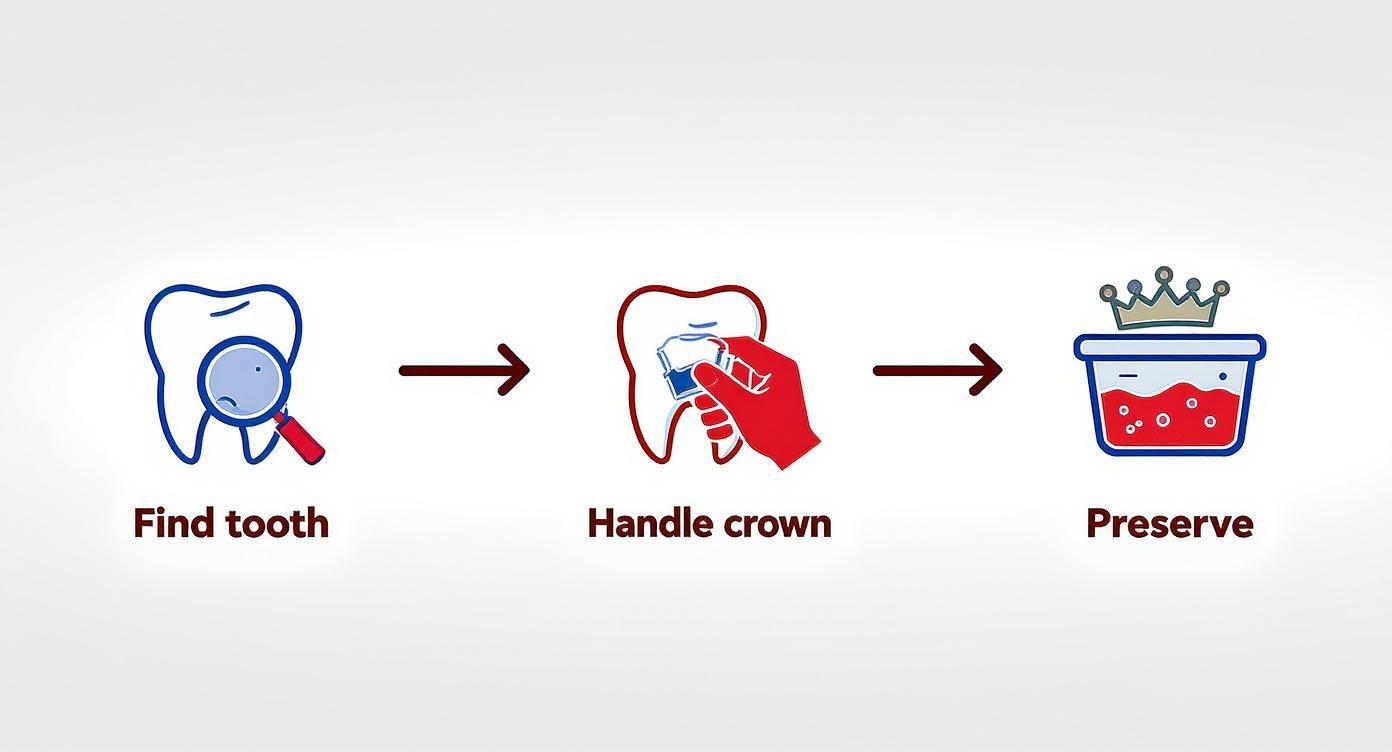
This simple graphic breaks down the key steps for handling and preserving the tooth to protect your dental health.
Sometimes a quick reference chart is the easiest way to process what to do in a stressful situation. Here's a simple breakdown of the immediate dos and don'ts to save your tooth.
Immediate Action Plan for a Knocked Out Tooth
| Critical Action (DO THIS) | Common Mistake (AVOID THIS) |
|---|---|
| Find the tooth immediately. | Wasting time looking for other things. |
| Handle the tooth only by the crown. | Touching or scrubbing the root. |
| Gently rinse with milk or saline if dirty. | Using tap water, soap, or alcohol. |
| Try to reinsert it into the socket. | Forcing it if it doesn't fit easily. |
| Store in milk if you can't replant it. | Letting the tooth dry out or wrapping it in a tissue. |
| Call an emergency dentist right away. | Waiting to see if the pain goes away. |
Following the "DO THIS" column gives you the best possible shot at saving the tooth and maintaining your natural appearance. Once you've secured it, the final step is getting professional help immediately. You can book your emergency dental visit now to save precious time. Every minute counts for your smile.
How to Properly Handle and Preserve the Tooth
Once you’ve found the tooth, what you do in the next few minutes is absolutely critical. It can make all the difference between saving the tooth and losing it for good. The main goal here is to protect the incredibly fragile cells on the tooth's root, which are the key to a successful reimplantation. Handling it the right way gives us the best chance to restore your smile exactly as it was.
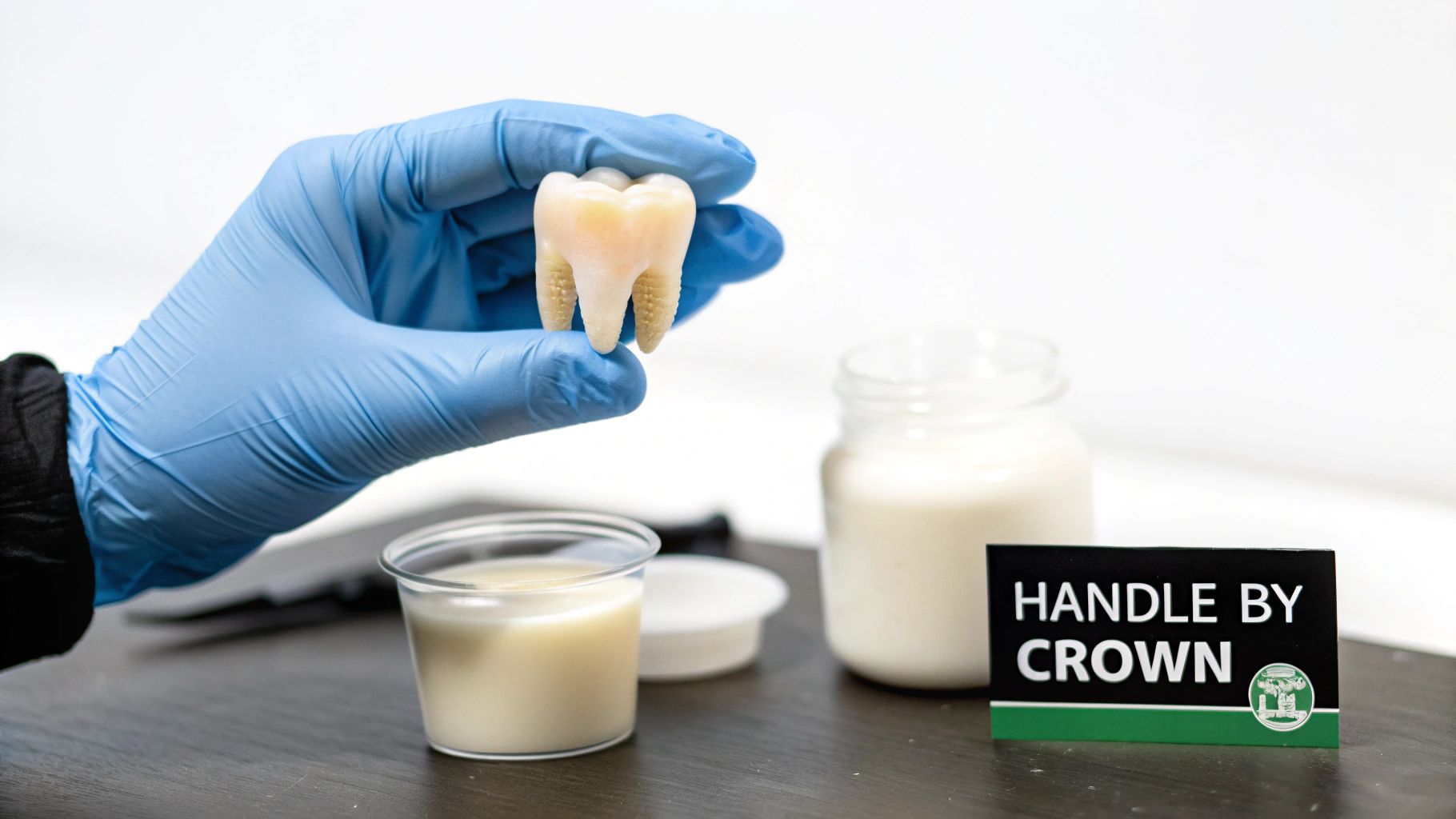
Your number one rule: pick it up by the crown. That's the shiny, white part you normally see when you smile. Whatever you do, don't touch, wipe, or scrub the root. The root is covered with a layer of living tissue called the periodontal ligament, and it's as delicate as it sounds. If those cells get damaged, the tooth simply won't be able to reattach to the bone in the socket, compromising the restoration of your smile.
If the tooth landed in the dirt, you'll need to give it a quick, gentle rinse. But be careful—what you rinse it with matters immensely for its survival.
Rinsing the Tooth Safely
You might instinctively reach for the tap, but that’s a huge mistake for the tooth's health. The composition of regular tap water is hostile to the root's surface cells; it can cause them to burst and die on contact, destroying any hope of saving the tooth.
Instead, you need a solution that won’t harm this vital tissue. Here are your best bets for a quick rinse (no more than 10 seconds):
- Cold Milk: Its pH and nutrient makeup are surprisingly compatible with the cells on the root, helping to keep them viable.
- Saline Solution: If you have a first-aid kit handy, sterile saline is a perfect choice.
- A dedicated tooth preservation kit: Products like Save-A-Tooth are specifically designed for this exact emergency.
Holding the tooth by its crown, just let the milk or saline flow over it for a few seconds. That’s all it takes to get rid of any obvious debris without causing more trauma.
The science is clear: keeping the cells on the tooth's root alive is the single most important factor for long-term success. Every action you take, from handling to storage, should be focused on preserving this delicate tissue for the best dental health outcome.
Choosing the Best Storage Method
After a quick rinse (if needed), you have to keep the tooth moist. A dry tooth is a dead tooth. In fact, the cells on the root can start to die in as little as 15 minutes if they’re just left out in the air. Storing it the right way buys you the crucial time you need to get to our office and save your smile.
Here’s where to keep the tooth, in order of what’s best for its preservation:
- Back in the Socket: This is, by far, the ideal environment. If you can, gently guide the tooth back into its socket. Don't force it. Once it's in, bite down gently on a clean cloth or gauze to hold it in place.
- A Tooth Preservation Kit: These kits contain a balanced salt solution that can keep the tooth's cells alive and well for several hours.
- A Container of Cold Milk: If you can't get it back in the socket, a small container of cow's milk is your next best option. It’s readily available and its chemical makeup helps keep the root cells viable.
- The Person's Own Saliva: As a last resort, have the person hold the tooth inside their cheek. Just be extremely careful not to swallow it.
By following these simple handling and preservation steps, you dramatically increase the chances that your emergency visit will end with a saved tooth. This careful first aid is the bridge between the accident and successful professional care that restores your smile.
When to Replant the Tooth Yourself
In the chaotic moments after a tooth is knocked out, you might feel a surge of panic. But taking a deep breath and gently placing a permanent tooth back into its socket can be the single most important thing you do to save it.
This quick action can make all the difference for successful reattachment, preserving your natural smile and preventing future dental issues. But it's not always the right call, and knowing when to act—and when to hold back—is everything.
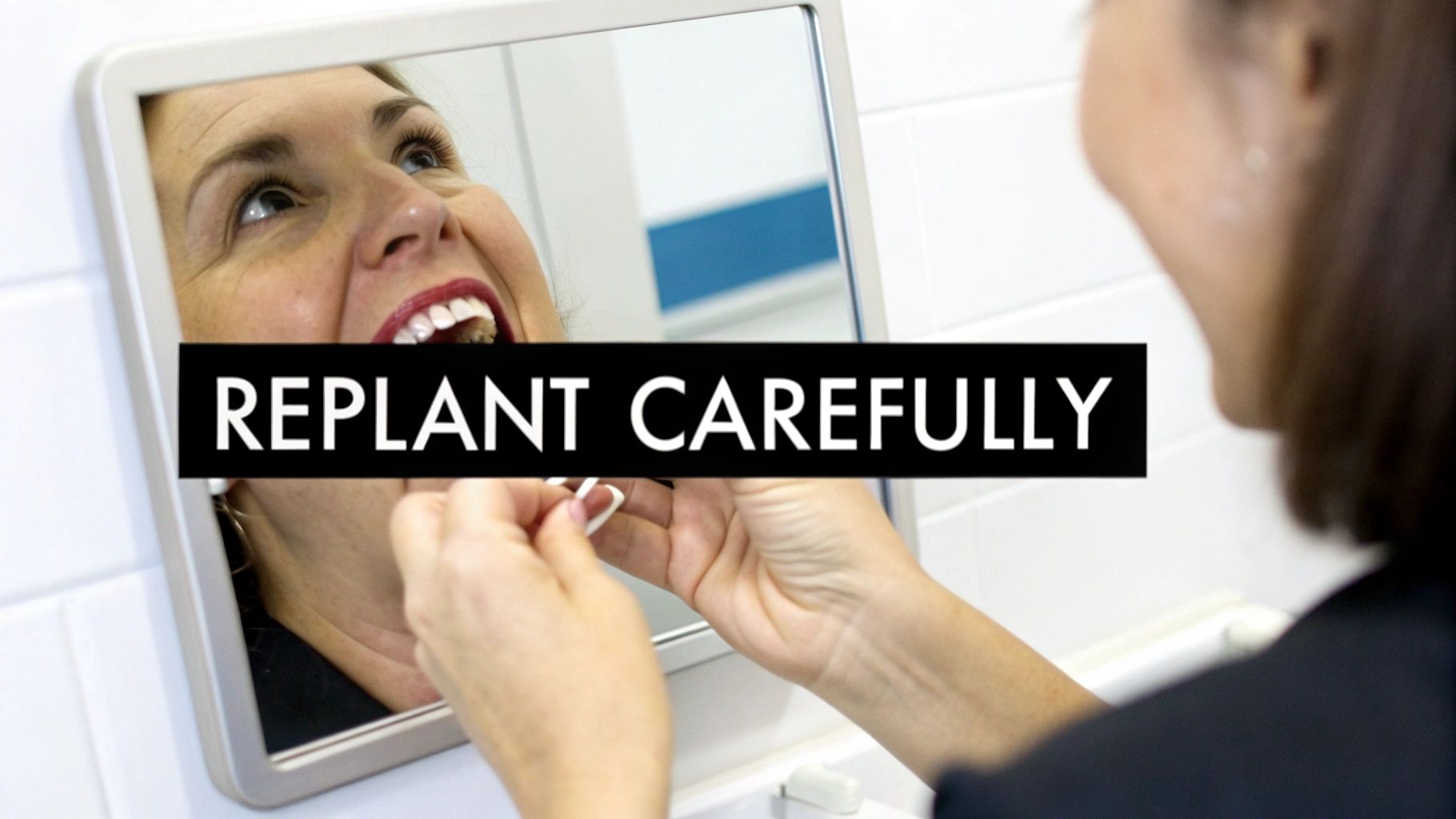
If the tooth is a permanent adult tooth, your main goal should be to try and replant it yourself. Think of the socket as the tooth's natural life-support system; it's the perfect environment to keep the delicate cells on the root alive. From our experience, we know a tooth that's put back in its socket within the first 15 minutes has the best possible chance of long-term survival and full function.
How to Safely Replant a Permanent Tooth
Once you've rinsed the tooth (if needed) with a bit of milk or saline, it’s time to act. This procedure sounds intimidating, but it's more straightforward than you might think and is hugely beneficial.
- Position the Tooth: Hold the tooth by the crown—the white part you chew with—and line it up over the empty socket. Double-check that it's facing the right direction to maintain your natural appearance.
- Guide It In: Gently push the tooth back into place. It should slide in without a lot of resistance. Never force it. If it doesn't want to go in, there could be debris in the socket or other damage.
- Secure It: Once it's in, have the person bite down gently on a clean piece of gauze or even a soft washcloth. That light pressure is enough to hold the tooth steady until you get to our office.
Taking this step immediately gives the bone and surrounding tissues a fighting chance to reattach to the root, which is exactly what we need for a successful outcome that restores your healthy smile.
Don't stress about getting it perfectly straight or if it feels a little high. The most important thing is getting it back into that moist, natural environment. We'll handle the final positioning and stabilization when you get here to ensure your smile looks great.
When You Should NOT Replant the Tooth
Knowing when not to put a tooth back in is just as critical as knowing when to do it. Trying to replant a tooth in the wrong situation can cause more harm than good, potentially damaging other teeth or impacting long-term dental health.
You should never try to replant a tooth if:
- It’s a Baby Tooth: Pushing a primary (baby) tooth back in can cause permanent damage to the adult tooth developing right underneath it. With kids, protecting their future permanent smile is always the top priority.
- The Person is Unconscious or Disoriented: In this case, there's a serious risk they could swallow or choke on the tooth.
- The Socket is Severely Damaged: If you suspect a jaw fracture or can see significant damage to the bone around the socket, don't try to force the tooth back in.
- The Tooth or Socket is Very Dirty: If you can't get the area reasonably clean after a quick rinse, it’s safer to store the tooth in milk and let a professional handle it.
In any of these scenarios, the best thing to do is pop the tooth in a container of milk and head straight to an emergency dentist. Making the right call protects their overall health while still giving the tooth its best shot at being saved.
Managing Pain and Bleeding on the Way to the Dentist
Once you’ve taken care of the tooth, your next focus is on the person who just lost it. A knocked-out tooth is a shocking experience, and you'll almost certainly be dealing with pain and bleeding from the empty socket. Managing these symptoms effectively is key for comfort and begins the healing process.
It's completely normal for there to be some bleeding. The goal is to apply gentle, consistent pressure right away to promote healthy healing.
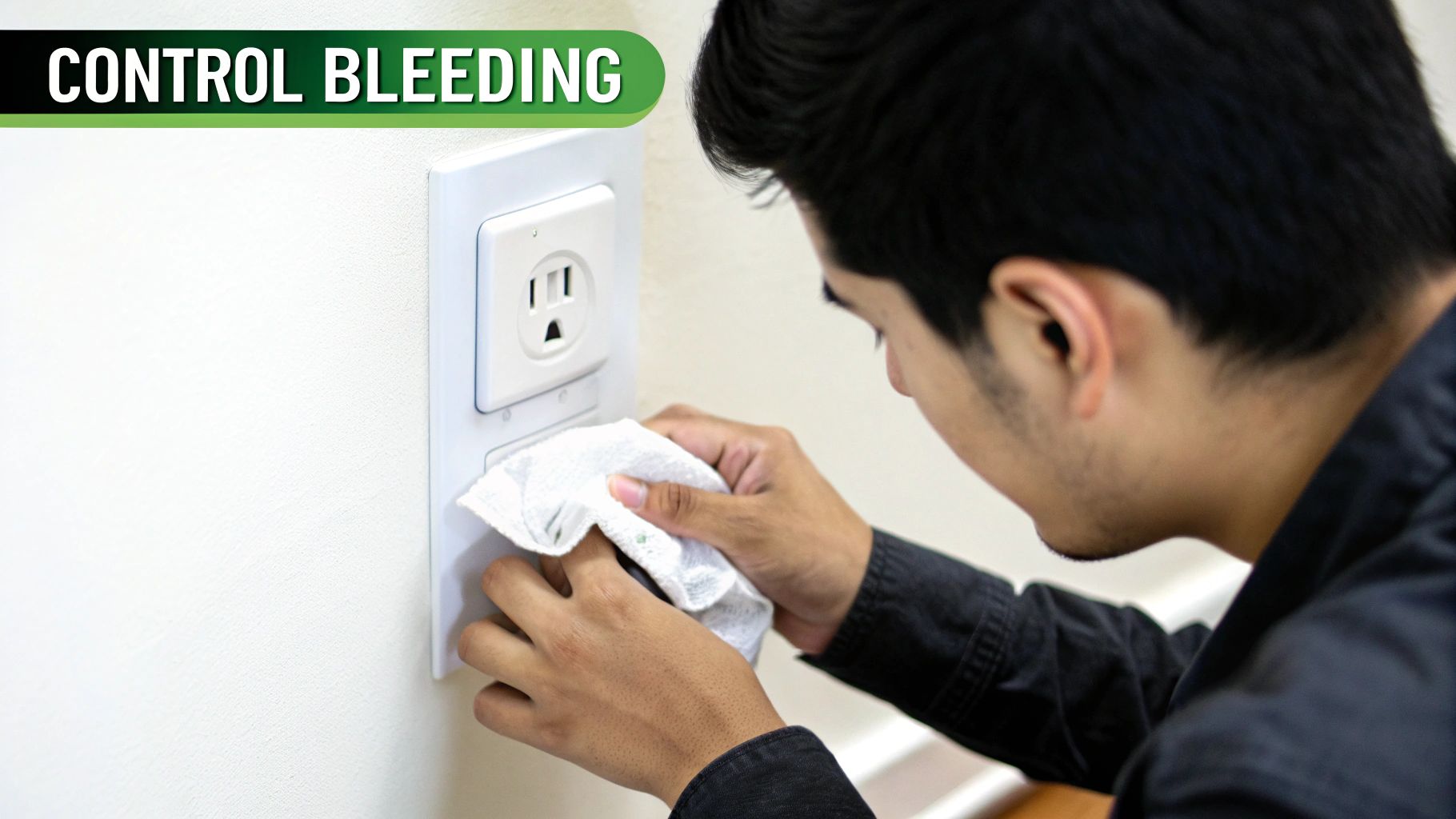
Find a clean piece of sterile gauze or even a soft washcloth. Fold it into a small, thick pad and place it directly over the bleeding socket. Then, have the person bite down with firm but gentle pressure. This simple action helps a blood clot form, which is your body's natural way to stop the bleeding and kickstart the healing process. Keep that pressure on all the way to the dentist.
How to Safely Manage Pain and Swelling
Pain and swelling are pretty much a given with this kind of dental trauma. One of the most effective and straightforward tools you have is a cold compress, which is great for your comfort and appearance.
Applying an ice pack—wrapped in a thin towel, of course—to the outside of the cheek or lip near the injury can bring a ton of relief. The cold constricts the blood vessels, which helps dial down both the swelling and the throbbing pain.
- Apply it for 15-20 minutes at a time to help numb the area and keep inflammation in check.
- Never put ice directly on the skin. Always use a cloth as a barrier to prevent an ice burn.
- Controlling swelling early is a big plus for reducing any facial bruising that might pop up later, helping maintain your normal appearance.
Over-the-counter pain medication can also make the trip to see us more comfortable. If you have it, stick with acetaminophen (like Tylenol), as it won't interfere with the blood clotting. Try to avoid aspirin or ibuprofen for now, since they are blood thinners and could make the bleeding worse. For some other great strategies, our guide on how to stop tooth pain fast has additional tips that can be a real lifesaver in a dental emergency.
Keeping calm is a form of first aid in itself. By managing the pain and bleeding effectively, you create a less stressful environment, which allows for clearer thinking and a safer trip to get the professional care needed to save the tooth and protect your oral health.
What to Do When It’s Your Child's Tooth
Seeing your child with a knocked-out tooth is a whole different level of stressful. The blood, the tears—it can make any parent's heart race. But this is actually a pretty common childhood injury, and knowing what to do in the moment can make all the difference for their future smile. Your calm, quick thinking is the best first aid you can give.
The very first thing you need to figure out is whether the lost tooth is a baby tooth or a permanent one, as this determines the right course of action for their dental health.
Baby Tooth vs. Permanent Tooth: What's the Difference?
Kids usually start losing baby teeth around age six and have all their permanent teeth (except for wisdom teeth) by about age 12 or 13.
If the knocked-out tooth belongs to a child under six, it’s almost certainly a primary (baby) tooth. If your child is between 7 and 11 years old, it’s most likely a permanent tooth—this is actually the peak age range for this kind of dental injury.
The most important rule to remember is this: Never, ever try to replant a knocked-out baby tooth. Forcing it back into the socket can cause serious, permanent damage to the adult tooth growing in the jaw right underneath it. Protecting their future smile and proper dental development is the number one priority here.
Even though you won’t be putting the baby tooth back, a trip to the dentist is still a must. We need to check for any hidden damage to the gums, jawbone, or nearby teeth. Sometimes, we might recommend a space maintainer to make sure their permanent teeth come in straight, keeping their smile properly aligned for a lifetime of good oral health.
Handling a Child's Knocked-Out Permanent Tooth
If you’re sure it's a permanent tooth, the goal shifts to saving it to preserve their smile. Find the tooth and, handling it only by the white enamel crown, you can try to gently guide it back into the empty socket. Once it's in, have your child bite down on a clean washcloth or gauze to hold it steady.
If you can’t get it back in, don't force it. Just place it immediately into a small container of cold milk.
The actions parents take in these first few minutes are absolutely critical for their child's dental future. It's shocking, but global studies show many parents aren't sure of the right first aid steps. This confusion often leads them to a hospital ER, where the staff might not be trained for dental trauma, causing delays that could cost the tooth. Knowing what to do can truly save their smile, and you can learn more about these critical findings on parental awareness.
No matter what—baby tooth or permanent—comforting your child is key. A cold compress held against their cheek can help with pain and swelling. Then, call an emergency dentist right away to make sure your child gets the expert care they need to protect their smile for years to come.
What to Expect at Your Emergency Dental Visit
Once you're through our doors, you can finally take a breath. You’ve done the hard part, and now it’s our turn to step in and save that tooth. Knowing what comes next can make the whole situation feel a lot less stressful and highlight the benefits of this urgent procedure.
You made the right call coming to an emergency dentist instead of the ER. Hospitals are fantastic for many things, but they just don't have the specialized tools and deep-dive dental knowledge needed for this kind of trauma.
We'll start with a quick but thorough look at the situation. We need to know exactly what happened, check for any other damage to your gums or jaw, and see what shape the tooth and socket are in. We'll gently clean everything up to get it ready for the next step.
The Reimplantation and Splinting Process
If the tooth can be saved, our number one priority is getting it right back where it belongs. We’ll carefully reposition it in the socket, making sure the fit is perfect to preserve your natural bite and smile. This procedure is designed to restore both function and appearance.
Now, that tooth needs to stay put while it heals. To make that happen, we'll secure it with a dental splint. Think of it like a small, discreet cast for your tooth. It connects the injured tooth to its healthy neighbors, holding it steady so the delicate root tissues can heal and reattach to the bone. This splint usually stays on for a few weeks and is a vital step for long-term dental health.
Dental injuries like this are a massive global health issue, affecting over a billion people. The success rate for saving a knocked-out permanent tooth can swing from as low as 39% to as high as 89%. What makes the difference? Almost entirely how fast it's treated. This really shows why your quick thinking and our immediate care are so crucial for a positive outcome. You can discover more insights about dental trauma management from the experts.
Even with perfect technique, the long-term success of a replanted tooth isn't guaranteed. But getting immediate, correct treatment dramatically improves the odds. We'll need to see you for follow-up appointments to monitor the healing and catch any potential complications early to ensure your smile stays healthy.
Before you leave, we'll give you detailed aftercare instructions. This will cover everything from what you can eat, how to keep the area clean, and what signs to watch out for. Following these steps to the letter is the final piece of the puzzle—it gives your tooth the best possible shot at lasting for years to come.
Answering Your Questions About Knocked-Out Teeth
When a tooth gets knocked out, your mind races. It's a stressful, often shocking experience, and it’s completely normal to have a million questions running through your head. We've been there with patients in this exact situation, so we've put together some straight answers to the most common concerns.
How Long Do I Really Have to Save the Tooth?
Time is absolutely your biggest enemy here. The best chance you have to successfully save a tooth is within the first 30 to 60 minutes.
Why the rush? The root of your tooth is covered in tiny, delicate living cells that are essential for it to reattach to the bone in your jaw. Once that tooth is out of your mouth, those cells start to dry out and die. Getting to a dentist fast is the single most important thing you can do to preserve your natural smile.
What if I Can't Find the Tooth?
First, don't panic. If the tooth is gone for good, your priority immediately shifts to two things: managing any bleeding and getting to an emergency dentist as soon as possible.
We'll take a look at the area to make sure there's no other damage to your gums, jaw, or neighboring teeth. From there, we can talk about the best ways to restore your smile. Options like a dental implant, bridge, or a partial denture are all fantastic solutions that can bring back both the look and function of your bite, ensuring your smile remains complete and healthy.
A Critical Warning: Never Use Tap Water
It might seem like the logical thing to do, but cleaning a knocked-out tooth with regular tap water is a huge mistake for its health. The chemical makeup of tap water is harsh enough to damage the root's surface cells, causing them to burst. This kills the very cells needed for the tooth to reattach. Always stick to milk, a saline solution, or even the person's own saliva.
If We Save the Tooth, Will It Last Forever?
A tooth that’s been successfully put back in place can last for many, many years—sometimes even a lifetime. Its long-term survival really hinges on how quickly it was replanted and what condition the root was in. This procedure offers the incredible benefit of keeping your original tooth.
This isn't a one-and-done fix, though. Diligent follow-up care is crucial. We'll need to monitor the tooth closely over time for any signs of complications, just to make sure everything is healing perfectly and your long-term dental health is secure.
When a dental emergency hits, you need expert care, and you need it now. The team at Grand Parkway Smiles keeps spots open for same-day emergency appointments to give you the urgent treatment you need. Don't wait—contact us right away for professional help.