Let's be honest, if you're typing "sedation dentist near me" into a search bar, you're probably not just casually browsing. You're looking for a way to get necessary dental work done to improve your health and smile, without the overwhelming sense of dread that can come with it. The good news is, you've found the solution: sedation dentistry.
This approach uses safe, effective medication to help you completely relax during your appointment. It transforms what could be a stressful experience into a calm, comfortable one, allowing you to achieve the healthy, beautiful smile you deserve. For anyone with real dental fear, it’s not a luxury—it's the key that unlocks the door to essential oral healthcare.
Why Dental Anxiety Is a Real Barrier to a Healthy Smile
Dental anxiety isn't just a case of "the jitters." For millions of people, it's a legitimate phobia that makes them avoid the dentist at all costs. This avoidance creates a dangerous cycle for your dental health. A small cavity that could have been a simple, tooth-preserving fix gets ignored. Over time, it turns into a major problem requiring a root canal or even an extraction—procedures that not only sound intimidating but are far more invasive than early treatment.
This cycle of fear and avoidance doesn't just damage your teeth; it chips away at your confidence and overall health.
Ignoring dental issues is like ignoring a leaky roof. It won't fix itself; it will only get worse, impacting both your health and appearance. Untreated gum disease can lead to tooth loss and bone damage, and infections can have serious consequences for your entire body. Sedation dentistry breaks that cycle, making it possible to restore the health and beauty of your smile.
You Are Far From Alone in This
If the thought of a dental chair makes your heart pound, know that you have plenty of company. It's a widespread issue. Research has shown that around 30% of people actively put off dental visits simply because they're afraid. What's more, women are 2.5 times more likely than men to experience this level of anxiety.
When you consider that oral diseases impact nearly 3.7 billion people around the globe, this fear becomes a massive public health roadblock, preventing countless people from achieving optimal oral health. You can read more about these sedation dentistry statistics and their impact on oral health.
For so many of our patients, it’s the thought of the procedure that triggers the most stress. Sedation dentistry is our way of meeting that fear head-on. We create a genuinely calm, relaxed state so you can get the care you need to improve your smile without the emotional baggage. Your comfort is just as important as the clinical outcome.
Taking Back Control of Your Dental Health
Choosing a sedation dentist is more than just a preference; it’s a powerful step toward prioritizing your well-being and appearance. It gives you the ability to finally tackle those procedures you’ve been putting off—treatments that can completely change your smile and how you feel every day. Whether it's restoring a tooth with a filling, removing problematic wisdom teeth, or undergoing a full mouth reconstruction, sedation makes it all manageable.
The benefits go far beyond just surviving a single appointment:
- Get More Done, Faster: Because you're fully relaxed, your dentist can often complete multiple treatments in one longer, more efficient session. This means fewer trips to the office to achieve your smile goals.
- Amnesia is a Good Thing: Many types of sedation leave you with little to no memory of the actual procedure. This helps break the negative association with dental work, making it easier to maintain your oral health in the future.
- A Healthier Future: By making regular dental care possible, you prevent small problems from becoming major issues. You're not just fixing a tooth; you're investing in a lifetime of better oral health and a confident smile.
Understanding Your Sedation Dentistry Options
When you start searching for a "sedation dentist near me," you'll quickly see that not all sedation is created equal. The right choice really hinges on your specific level of anxiety and the complexity of the dental work you need to enhance your smile. Think of it as a spectrum of options, ranging from light relaxation to a deep, peaceful state, all designed to help you get the care you need comfortably.
The desire for a pain-free, anxiety-free dental experience is more common than ever. In fact, the market for dental anesthesia is projected to hit USD 2.89 billion by 2029. That massive number is driven by the 3.5 billion people worldwide who have untreated oral health issues and are finally seeking comfortable ways to restore their dental health. Sedation is a huge part of this shift, empowering patients to overcome their fears and achieve their desired results.
This decision tree clearly shows how dental anxiety often steers patients toward sedation for a much better experience at the dentist.
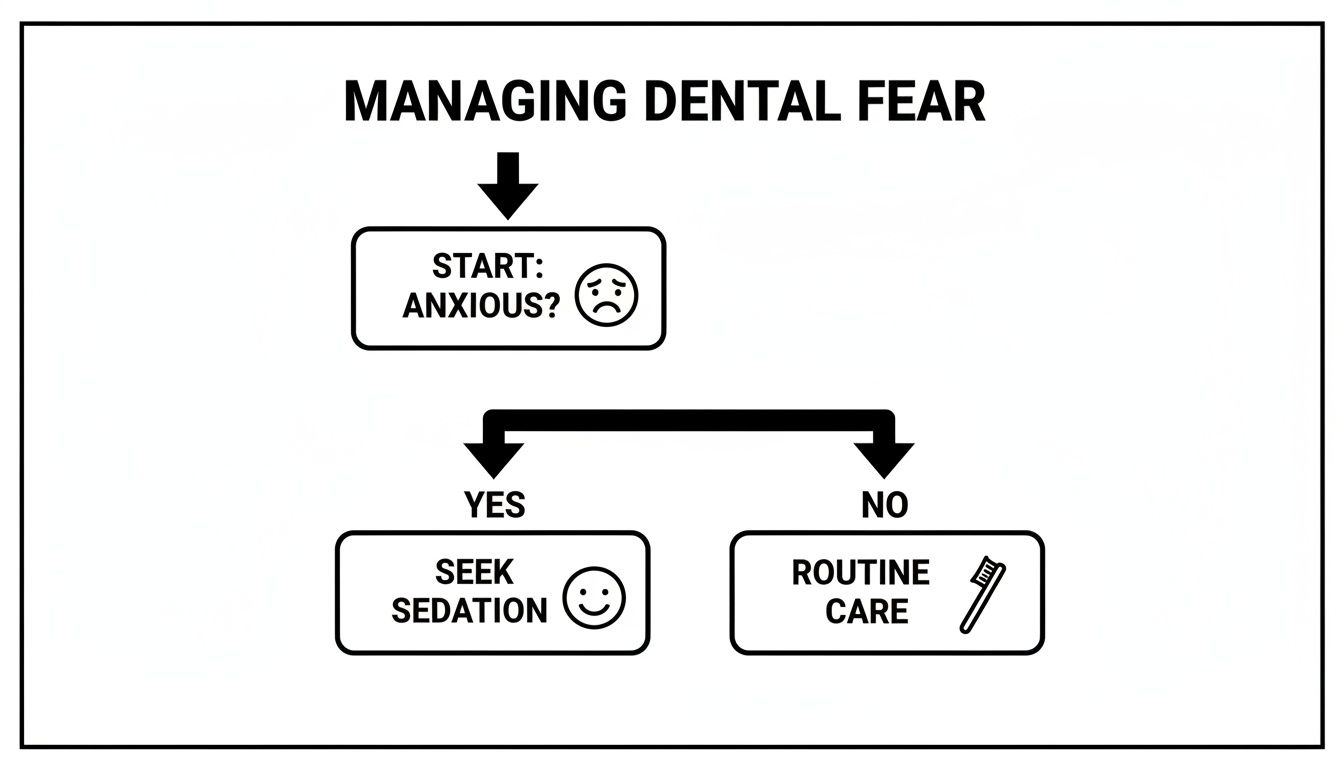
As the chart points out, for anyone feeling nervous about their appointment, sedation dentistry is the recommended path to getting necessary care without all the stress.
The Different Levels of Sedation
To help you figure out what might work for you, let's break down the common methods. Each one offers a different level of relaxation, so you can have an informed chat with your dentist about what fits your situation best.
| Comparing Sedation Dentistry Levels |
| :— | :— | :— | :— |
| Sedation Type | Level of Consciousness | Best For | Recovery Time |
| Nitrous Oxide ("Laughing Gas") | Awake but very relaxed | Mild anxiety, routine cleanings, short procedures | A few minutes; you can drive home |
| Oral Sedation (Pill) | Very drowsy, may doze off | Moderate anxiety, longer procedures like crowns | Several hours; need a driver |
| IV Sedation | "Twilight sleep," deep relaxation, little memory of the procedure | High anxiety, complex or long procedures (implants, surgery) | 24 hours; need a driver and monitoring |
Understanding these distinctions is the first step toward finding a solution that makes you feel safe and confident about improving your dental health.
Minimal Sedation: Nitrous Oxide
You've probably heard of "laughing gas," and that's exactly what nitrous oxide is. It's the lightest form of sedation available. You simply breathe the gas through a small, comfortable mask that rests over your nose. It won’t put you to sleep, but it will create a pleasant, relaxed feeling that melts away that edge of anxiety.
One of its biggest advantages is how quickly it works—and how fast it wears off. Once the mask is removed, the effects are gone within minutes, and you’re perfectly fine to drive yourself home. It’s an ideal choice for:
- Anyone with mild nerves about a routine cleaning or filling.
- Helping a sensitive gag reflex to calm down.
- Taking the stress out of shorter dental appointments that maintain your oral health.
Moderate Sedation: Oral and IV Methods
If your anxiety is more significant or you're facing a longer appointment to improve your smile, moderate sedation provides a much deeper level of calm. With these methods, you'll feel profoundly relaxed and might even drift off, but you can still be easily awakened if needed.
-
Oral Sedation: This is as simple as taking a prescribed pill (often Halcion) about an hour before your procedure. You’ll arrive at the office feeling drowsy and completely at ease. Many people have little to no memory of the treatment afterward, which is a huge relief for them. It's a fantastic option for procedures like getting a crown or having several fillings done at once to restore tooth function and appearance.
-
IV Sedation: Administered directly into a vein, this approach allows for a deep state of relaxation that starts working almost immediately. The best part is that your dental team can precisely adjust the sedation level throughout the entire procedure, making it the gold standard for both safety and effectiveness. This allows us to complete very complex work—like full-mouth reconstructions or All-on-4 dental implants—while you rest peacefully. To learn more, we have a guide that explores whether IV sedation is right for you.
With IV sedation, patients who have avoided the dentist for years can finally get all the work they need in a single, stress-free visit. It completely removes that psychological barrier, allowing us to focus on what matters: restoring their smile's health and beauty.
Once you understand these options, you can go into a consultation feeling empowered. You’ll be ready to have a real conversation with your dentist and choose the path that makes you feel the most comfortable and confident about your dental care.
How to Vet a Sedation Dentist's Credentials and Technology
Once you've decided sedation dentistry is the right move for you, the next step is a big one: finding the right professional. A quick search for a "sedation dentist near me" will pull up plenty of names, but your real goal is to find someone whose expertise and equipment will keep you safe while delivering a fantastic result for your smile. It's time to look past the website photos and dig into the details that truly matter for your health.
Real skill in sedation dentistry isn't just about listing it as a service. It's a deep commitment to ongoing training and, above all, patient safety. A dentist’s qualifications are the first thing you should check—they're the foundation of trust. This shows they’ve gone the extra mile to master the specific skills needed to administer sedation safely and effectively.
Assessing a Dentist's Qualifications
Here’s a little-known fact: not all dental licenses are created equal when it comes to sedation. A general dental license doesn't automatically give a dentist the green light to perform all levels of sedation. For anything beyond the basics, especially moderate to deep methods like IV sedation, specific permits and advanced training are non-negotiable.
When you're checking out a potential dentist, here’s what to look for to make sure they have the right background:
- State Licensing and Permits: Be direct. Ask the office what level of sedation the dentist is licensed to provide in your state. They should be completely transparent about their specific permits for things like IV sedation or general anesthesia.
- Specialized Certifications: Keep an eye out for affiliations with respected organizations. A dentist certified by the American Dental Society of Anesthesiology (ADSA) or one who has completed a hospital-based residency has proven they've reached a higher level of competency.
- Hands-On Experience: Don't be shy about asking about their experience with cases like yours. A simple question like, "How many full-mouth reconstructions have you performed under IV sedation?" can tell you a whole lot about their real-world expertise in delivering excellent results.
The most important factor in sedation is the team's training. A well-trained team anticipates every scenario, ensuring the procedure is not only comfortable but also impeccably safe from start to finish. This expertise is what allows us to transform a patient's smile without compromising their well-being.
The Role of Modern Dental Technology
The technology a clinic uses is another huge indicator of its commitment to top-tier care. Advanced tools aren't just for show; they have a direct impact on safer procedures, more accurate diagnoses, and better final results for your smile. A practice that invests in modern equipment is really investing in you.
Take a CBCT (Cone Beam Computed Tomography) scanner, for example. This machine provides a 3D view of your jaw, teeth, and nerves. For complex procedures like placing dental implants, this is incredibly important. It lets the surgeon plan the exact placement with pinpoint precision, steering clear of critical structures and ensuring a more stable, successful, and aesthetically pleasing outcome.
Modern tech just makes the entire process better—more predictable and far more comfortable. Digital scanners have replaced those goopy, gag-inducing impression trays, and advanced monitoring equipment keeps you safe and sound throughout your sedation. All these tools work together to improve not just the health of your smile, but its appearance too, ensuring your results are built to last.
What to Ask During Your Sedation Dentistry Consultation
Think of your consultation as more than just a quick meet-and-greet. This is your chance to really dig in and find a sedation dentist you can trust with your health and appearance. It’s the perfect time to get a feel for their expertise, how they handle safety, and their overall approach to patient care. Walking in prepared with the right questions is the key to making a confident decision.
Forget the generic stuff. You want to ask questions that get to the heart of the sedation process and how it applies to you and your specific treatment plan. This conversation is all about building trust, which is the foundation for a positive dental experience and a fantastic outcome.
Questions About Safety and Monitoring
When you're under sedation, nothing is more important than your safety. A truly qualified team won't just tolerate these questions—they'll welcome them and have clear, confident answers ready to go. How they respond tells you everything about their commitment to the highest standards of care.
Here are a few critical questions to get the conversation started:
- Who is in charge of monitoring my vitals? It's essential that a dedicated team member—separate from the dentist doing the actual dental work—is keeping a close eye on your heart rate, blood pressure, and oxygen levels the entire time. This is the gold standard.
- What kind of monitoring equipment do you use? You want to hear them mention things like pulse oximeters, blood pressure cuffs, and ECG monitors. This tech provides a constant stream of data, ensuring you're safe and stable from start to finish.
- What happens in an emergency? Ask them to walk you through their emergency protocols. A well-prepared team has established procedures, advanced life support training, and all the necessary equipment right there in the office.
Questions About the Procedure and Recovery
Understanding what the entire experience will be like—from the moment you sit in the chair to your recovery at home—is one of the best ways to ease any lingering anxiety. These questions help personalize the treatment, whether you're coming in for a cosmetic touch-up or a complex full-mouth reconstruction.
A great sedation dentist plans for every stage of your care, not just the procedure itself. The consultation should feel like a collaborative process where your comfort and long-term results for your smile are the central focus.
To get a clear picture of what to expect, consider asking:
- Can you describe what I'll feel like during and after sedation? This helps set realistic expectations. The dentist should be able to explain the typical sensations for the specific type of sedation they're recommending for you.
- What does the recovery process look like for a procedure like mine? The answer needs to be specific to you. For instance, bouncing back from a single implant under IV sedation is very different from recovering from a full set of veneers.
- How will sedation help you achieve the best results for my treatment plan? This is a great question because it directly links the comfort of sedation to the quality of the dental work. When a patient is completely relaxed, the dentist can work more efficiently and with greater precision, which ultimately leads to a healthier, better-looking smile.
Navigating the Costs and Insurance for Your Treatment
Let’s talk about one of the biggest questions on everyone's mind: what’s this going to cost? It's a perfectly practical question. Getting a handle on the financial side of sedation dentistry right from the start means you can focus on what really matters—your dental health and achieving your smile goals—without stressing about surprise bills later.
The final price tag can shift based on a few things, like the kind of sedation you need, how long your procedure will be, and even your location. For example, a quick treatment using laughing gas is naturally going to be less expensive than a full mouth reconstruction that requires several hours under IV sedation. The most important thing is finding a dental office that is completely upfront about these costs.
Working with Your Dental Insurance
Many dental insurance plans, especially PPO plans, do offer some coverage for sedation. This is particularly true when it's considered medically necessary for a more involved or surgical procedure. But—and this is a big but—coverage isn't a given. It's always best to be proactive. Before you schedule anything, you or your dental office should get in touch with your insurance provider to get the real story on your benefits.
To make sure you get clear answers, you’ll want to ask a few specific questions:
- Does my plan cover sedation for this exact procedure (like wisdom tooth removal or dental implants)?
- What percentage of the sedation fee will be covered? Is there an annual maximum that this will count against?
- Do I need to get pre-authorization before my appointment to lock in coverage?
Here’s a pro tip: Always ask for a detailed breakdown of benefits in writing from your insurance company. This is often called a pre-treatment estimate, and it takes all the guesswork out of the equation so you can budget effectively.
Exploring Flexible Payment Solutions
Even with a good insurance plan, you might still have some out-of-pocket costs. A truly patient-focused sedation dentist gets this and will usually have different payment options to make sure you can get the care you need. Don't be shy about asking the office’s financial coordinator what’s available. These solutions are there to help fit your budget, so cost doesn't have to be a barrier to a healthy, beautiful smile.
Many practices offer great alternatives to paying all at once:
- In-House Savings Plans: If you don't have insurance, these can be a lifesaver. You typically pay an annual fee and get significant discounts on treatments, including sedation.
- Third-Party Financing: Companies like CareCredit or LendingPoint offer payment plans, often with low or even no interest for a promotional period. This lets you break up the total cost into smaller, more manageable monthly payments.
At Grand Parkway Smiles, we believe clear, honest communication is everything. We’ve even put together a guide to help you get more comfortable with the financial side of things. You can learn more by understanding dental insurance and financing options at our practice. Our main goal is to make sure you feel confident moving forward, knowing every detail has been taken care of.
Preparing for Your Appointment and Ensuring a Smooth Recovery
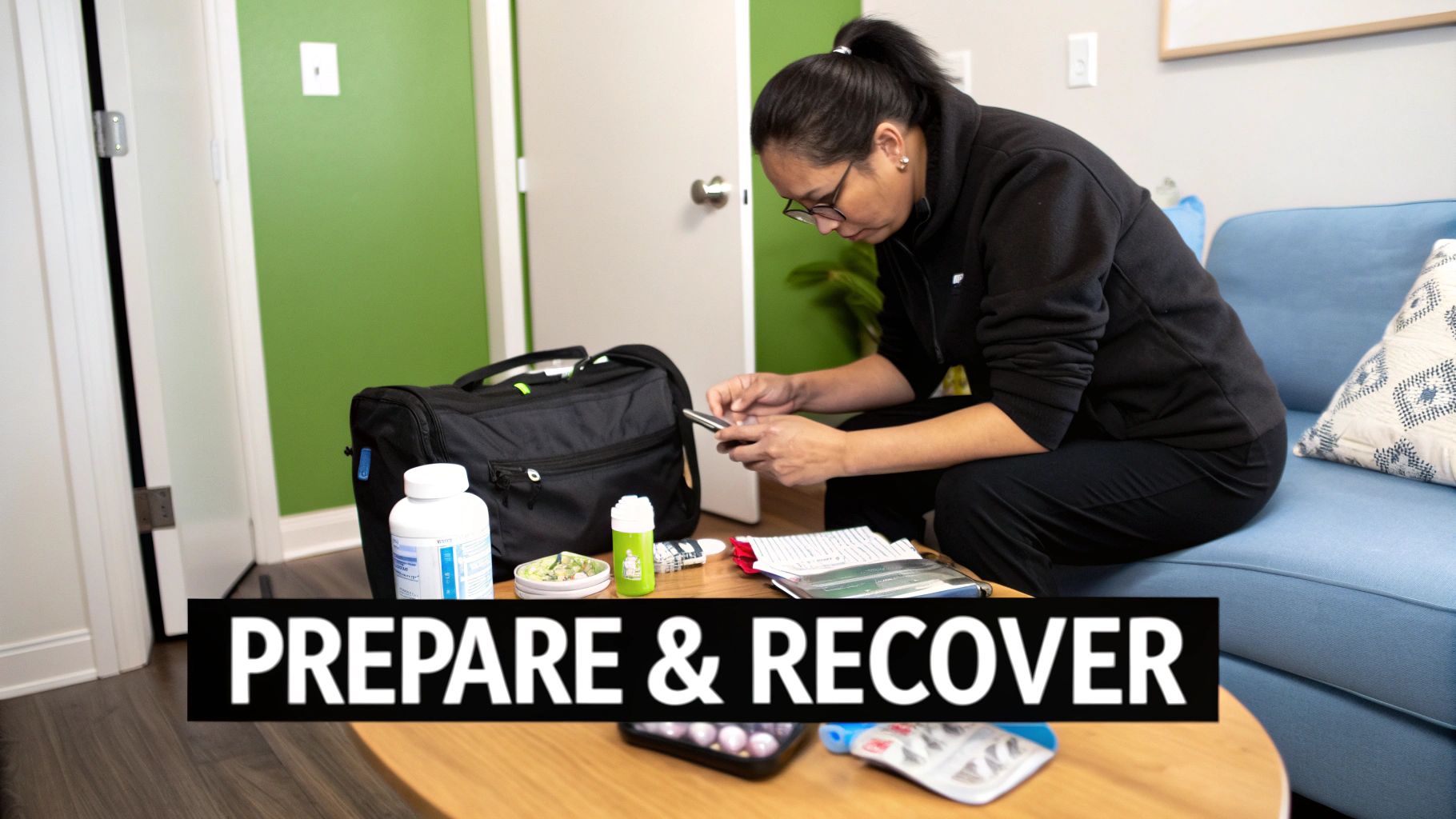
Knowing what to do before and after your dental appointment can make a world of difference. It helps calm the nerves and actually helps your body heal faster. A little bit of prep work ensures the day of your procedure is as low-stress as possible, letting you focus on the fantastic result: a healthier, happier smile. And your recovery plan? That's just as important for getting you back on your feet comfortably and quickly so you can enjoy the benefits of your procedure.
Before Your Sedation Appointment
Your sedation dentist will give you a detailed list of instructions specific to your health and the procedure you're having. These aren't just casual suggestions—they're vital for your safety. Following them to the letter ensures the sedation works perfectly and everything goes off without a hitch.
In the days leading up to your appointment, here are a few simple but crucial things to tick off your list:
- Confirm Your Ride: You absolutely cannot drive yourself home unless you're only having nitrous oxide (laughing gas). Make sure you have a trusted friend or family member locked in to get you to and from the clinic.
- Plan Your Meals: Do yourself a favor and stock your fridge with soft foods. Think yogurt, soups, and smoothies. The last thing you'll want to do while recovering is worry about what to cook.
- Adjust Your Medications: This is a big one. You'll need to chat with both your dentist and your regular doctor about any medications you take. Some might need to be adjusted or even skipped on the day of your appointment.
On the day itself, think simple and comfortable. Wear loose-fitting clothes and skip the jewelry, makeup, or contact lenses. These little details just make it easier for the dental team to keep an eye on you and ensure you're comfortable throughout.
After Your Sedation Procedure
Once the work is done, your focus shifts to recovery. How groggy you feel will really depend on the kind of sedation you had. If you received oral or IV sedation, you'll definitely need that ride you arranged to get you home safely.
The first 24 hours after sedation are all about rest. Seriously. Clear your schedule completely—no work, no errands, no chores. Your only job is to relax and let your body heal.
Think of your post-op instructions as your personal roadmap to a smooth recovery. They'll give you specific advice on managing pain, handling any swelling, and keeping your mouth clean to protect your new dental work.
- Managing Discomfort: Your dentist will likely suggest over-the-counter pain relievers or give you a prescription. Take it exactly as directed, even if you're feeling okay at the moment. It's all about staying ahead of any potential pain.
- Dietary Guidance: Stick with those soft foods for a few days. And a pro tip: avoid using a straw. The suction can mess with the healing process, especially if you had a surgical procedure.
- Oral Hygiene: You'll get clear instructions on how to keep the area clean without disturbing it. This usually involves gentle saltwater rinses, typically starting the day after your appointment.
By following these straightforward steps, you can help make sure your entire experience with sedation dentistry is smooth, comfortable, and leads to the best possible outcome for your smile.
Your Top Sedation Dentistry Questions, Answered
Even after getting the rundown, it’s completely normal to have a few more questions pop up. Getting those final answers is key to feeling 100% confident about choosing sedation for your dental care. Let’s tackle some of the most common things we hear from patients just like you.
Will I Be Completely Asleep?
This is probably the biggest misconception out there. Whether you’re “asleep” really depends on the level of sedation you and your dentist agree on for your specific treatment. The goal is always your comfort and safety, not just knocking you out.
- Minimal Sedation: Think of nitrous oxide (laughing gas). You’re fully awake and can chat with us, but you’re in a much more relaxed, carefree state.
- Moderate Sedation: This is the "twilight" zone, usually achieved with an oral pill or through an IV. You'll feel incredibly drowsy, maybe even dozing off, but you're not unconscious and can be easily awakened. A huge plus here is that most people remember little to nothing about the actual procedure, which does wonders for easing future dental anxiety.
- Deep Sedation/General Anesthesia: This is what most people think of when they hear "asleep." It's reserved for more intensive oral surgeries, and yes, you would be completely unconscious.
Is Sedation Dentistry Safe for Everyone?
While sedation dentistry has a fantastic safety record, it’s not a one-size-fits-all deal. That’s why the most important first step is a deep dive into your medical history. A properly qualified sedation dentist won't move forward without carefully reviewing your health to make sure you're a good candidate.
We look at everything—your age, weight, and any pre-existing conditions like sleep apnea or heart problems. This thorough screening process is non-negotiable. It allows us to pick the right type and the right dose of sedation just for you, making the whole experience as safe as it can be.
Sedation dentistry is incredibly safe when performed by a properly trained and credentialed team. Your health history dictates the safest path forward, ensuring a comfortable experience without compromising your well-being.
How Long Does It Take to Recover?
Your recovery time is directly linked to the kind of sedation you received. If you had nitrous oxide, the effects wear off just minutes after we remove the mask. You’ll feel perfectly normal and can even drive yourself home.
For oral or IV sedation, it’s a different story. You’ll feel groggy and out of it for several hours. It is absolutely essential that you arrange for a responsible adult to drive you home and hang out with you for a bit. By the next day, most patients are back to feeling like themselves, ready to show off their healthier, happier smile.
At Grand Parkway Smiles, our highly credentialed team is passionate about providing safe, comfortable sedation options that are personalized for you. If you've been searching for a sedation dentist near you, we're here to answer every last question and help you finally get the dental care you need and deserve, without the fear. Visit us online at https://dentistkatytx.com to schedule your consultation today.