Sedation dentistry for kids isn't a scary last resort. Think of it as a safe, compassionate tool that uses calming medications to help a child relax enough to get through their dental appointment. It's all about preventing fear and making sure your child can get the care they need for a healthy, happy smile down the road. This is especially helpful for kids who are very anxious, have special needs, or need a lot of dental work done at once to restore their oral health.
Easing Parental Concerns About Sedation Dentistry
It's completely normal to feel a knot in your stomach when you learn your child needs a significant dental procedure. As a parent, two big questions probably jump to mind: "Is this safe?" and "Is this really necessary?" We get it. But it helps to see pediatric sedation not as a failure, but as a key that unlocks better, safer, and more positive dental care, ultimately leading to better dental health.
A Tool for Better Dental Health Outcomes
Imagine sedation creates a calm, safe bubble around your child. Inside that bubble, they're relaxed and comfortable, which allows our pediatric dental team to work with total focus and precision. This controlled environment is a game-changer when we're fixing issues that have a real impact on your child's dental health and appearance.
For example, treating deep decay or saving a tooth with a pulpotomy requires careful, uninterrupted work. If a child is squirming or scared, it's not just stressful for them—it can compromise the quality of the treatment. Sedation simply removes those roadblocks so the dentist can do their best work, improving the final appearance and function of the tooth.
This leads to some huge wins for your child's smile:
- Higher Quality Restorations: A calm and still child means we can place fillings or crowns more precisely. This helps them last longer, look more natural, and function better.
- Comprehensive Care in One Visit: We can often get multiple treatments done in a single appointment, which means fewer trips to the dentist and a quicker return to a healthy, pain-free mouth for your child.
- Prevention of Worsening Problems: Taking care of serious cavities now prevents them from turning into painful infections or, even worse, needing an extraction that could affect their bite and smile.
Fostering a Positive Lifelong Relationship with Dentistry
One of the biggest, and often overlooked, benefits of sedation dentistry for children is how it shapes their future feelings about dental care. A single bad experience can create a lifetime of dental anxiety, causing them to avoid the dentist as adults and neglect their oral health. You can learn more by reading our guide to creating positive dental visits for children.
By making sure your child's visit is comfortable and fear-free, you're helping build a foundation of trust. They learn the dentist's office is a safe place that helps protect their smile. For parents looking for other ways to bring comfort, there are many options, including resources for managing child anxiety, such as weighted blankets.
The ultimate goal is simple: to protect and restore your child’s healthy smile while nurturing a positive attitude toward oral health that will last a lifetime. Sedation transforms a potentially frightening event into a gentle, manageable one.
When Is Sedation the Right Choice for Your Child?
Deciding if sedation is the right call for your child isn't always black and white. It often becomes the kindest and most effective option in certain situations, moving beyond just managing a little nervousness. This is about creating the best possible environment to protect your child's long-term dental health and their beautiful smile, ensuring they get the care they need without fear or stress.
Ultimately, the choice to use sedation dentistry for children is always a conversation. It’s a decision we make together—you and your pediatric dentist—after a thorough check-up and a real talk about what’s best for your child's unique personality and dental health needs.
Scenarios Where Sedation Offers Clear Benefits
Some situations make a traditional dental appointment nearly impossible. When this happens, minor oral health issues can quickly snowball into major problems. In these cases, sedation isn't just a convenience—it's the key to getting necessary treatment done to restore their dental health.
Imagine a toddler with several cavities. Their natural wiggles and inability to sit still for a long time make detailed dental work incredibly difficult. Sedation allows the dentist to fix all the cavities in one calm session, stopping the decay in its tracks and protecting their developing smile.
Another common hurdle is a child with an extra-sensitive gag reflex. This automatic reaction can make it extremely tough for a dentist to work on back teeth. Sedation helps relax that reflex, making procedures like placing a crown or taking an impression go off without a hitch, resulting in a healthier mouth.
Supporting Children with Special Healthcare Needs
The dental office—with its bright lights, buzzing sounds, and unfamiliar tools—can be an overwhelming place for any child. For a child with special needs, like autism spectrum disorder (ASD) or attention-deficit/hyperactivity disorder (ADHD), this environment can be completely unmanageable, making it impossible for them to cooperate.
For these children, sedation provides a quiet, peaceful state that dials down the sensory overload. It allows them to receive crucial dental care that might otherwise be put off, which is vital for maintaining their oral health and preventing painful problems down the line.
The approach we take often depends on the child's age and specific needs. Research confirms that sedation and general anesthesia are frequently the best options for children who struggle to cooperate, allowing them to receive necessary care. A large international study found that while kids under six are the most common recipients of this type of care, over half of the pediatric patients with special healthcare needs were older than six. You can read more about these findings on the role of sedation in pediatric dental care.
When Extensive Dental Work Is Needed
Sometimes, a child needs a lot of work done at once—maybe several fillings, a few crowns, and an extraction. Asking a young or anxious child to sit through multiple long appointments can create negative feelings about the dentist that stick with them for life.
- Efficiency: Sedation lets our team complete all the necessary work in a single visit. This means fewer interruptions to your family's schedule and a faster route to a healthy mouth.
- Comfort: Your child stays completely comfortable and is unaware of how long the procedure takes or how complex it is. They won't have memories of the sights, sounds, or feelings of the treatment.
- Quality: When a child is calm and still, the dentist can perform every step with maximum precision. This leads to better, longer-lasting results for your child's smile and overall dental health.
Understanding Your Child's Sedation Options
Figuring out the right type of sedation for your child is a big deal. It’s not just about getting the dental work done; it's about making sure the whole experience is as positive and stress-free as possible. The real goal is to match the level of relaxation to the specific treatment your child needs, which is a key part of protecting their smile for the long haul.
At Grand Parkway Smiles, we don't take a one-size-fits-all approach. We look at everything—your child's personality, how complex the procedure is, and their overall health—before recommending the safest, most effective sedation method for restoring their dental wellness. Let's walk through the options, from the gentlest to the deepest, so you can feel completely in the loop.
Nitrous Oxide The Gentle Hug
Nitrous oxide, which most people know as "laughing gas," is the mildest and most common type of sedation we use in pediatric dentistry. It's an excellent choice for kids with just a little bit of anxiety or for simpler, quicker procedures like getting a cavity filled to restore a tooth.
Think of it like a warm, comforting hug. Nitrous oxide doesn't put your child to sleep at all. Instead, it just creates a calm, relaxed feeling, and sometimes even a little bit of silliness. They are awake the entire time and can chat with us, but the gas helps melt away their worries. We administer it through a small, comfy mask that rests on their nose. One of the best parts is how quickly it works—and how fast it wears off. As soon as we take the mask off, the effects are gone in minutes, and your child can get right back to their day with a healthier smile.
This chart breaks down the main reasons we might recommend sedation, whether it's for anxiety, a complex treatment plan, or to help a child with special needs.
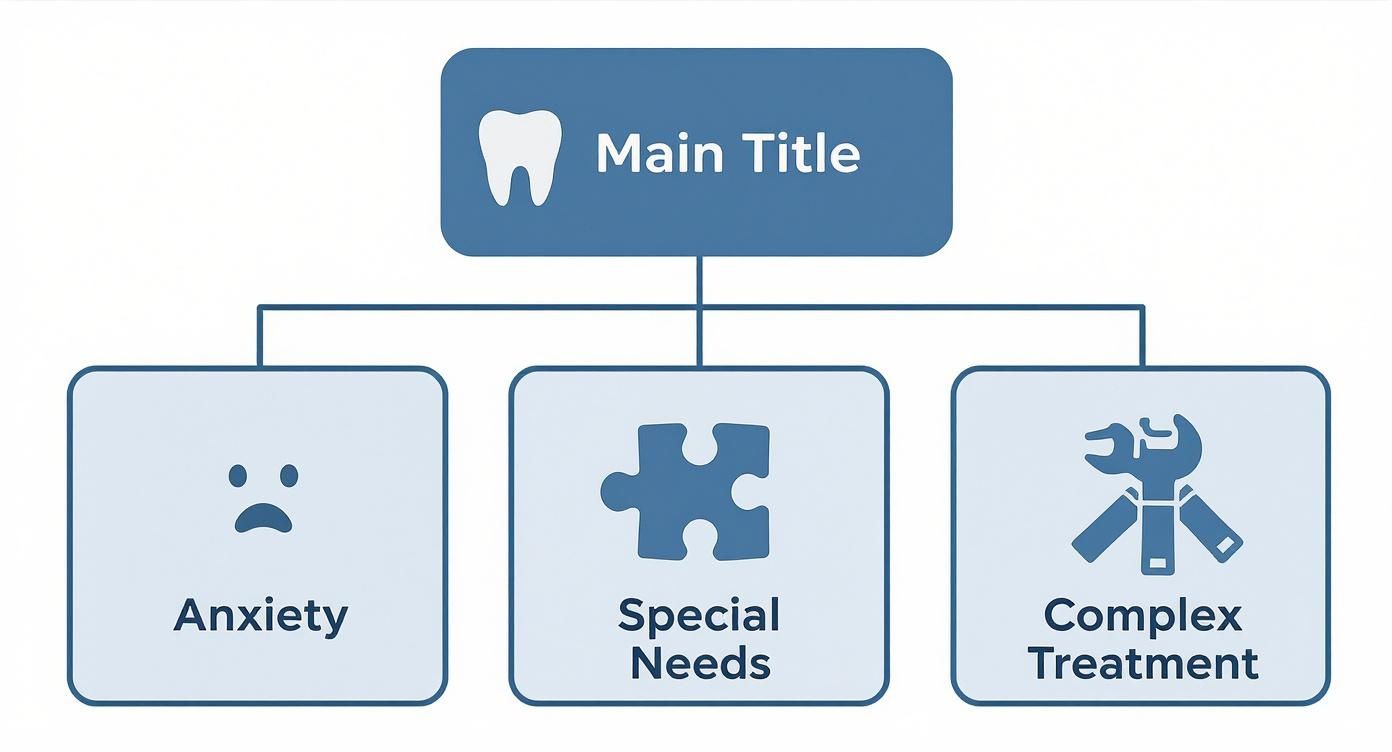
As you can see, sedation is a versatile tool that helps us clear away specific hurdles so that every child can get the fantastic dental care they deserve for a healthy smile.
Oral Sedation A Calming Nap
For kids who need a bit more help relaxing, oral sedation is often the perfect next step. This involves giving your child a liquid medicine, with the dose calculated just for them, before they come in for their appointment. The idea is to make them feel drowsy and incredibly calm, almost like they're settling in for a light nap.
Even with oral sedation, your child is still technically awake and can respond to us, but they'll be in a much deeper state of relaxation. This approach is highly beneficial for:
- Toddlers and younger children who just can't sit still for very long.
- Kids with moderate dental anxiety who need more than laughing gas to feel comfortable.
- Longer or more involved procedures that go beyond a simple filling, helping restore their oral health effectively.
One of the biggest pluses of oral sedation is its amnesic effect. Most children have little to no memory of the actual procedure afterward. This is a massive win because it helps prevent them from developing negative feelings about visiting the dentist, encouraging them to seek care to maintain their smile in the future.
Comparing Pediatric Sedation Dentistry Options
To help you see the differences at a glance, we've put together a simple table comparing the sedation methods we've discussed. This should make it easier to understand how each one works and when we might recommend it to achieve the best dental outcomes.
| Sedation Type | Level of Sedation | How It's Administered | Typical Recovery | Best For |
|---|---|---|---|---|
| Nitrous Oxide | Minimal (Relaxed & Awake) | Inhaled through a nose mask | A few minutes | Mild anxiety, short procedures |
| Oral Sedation | Moderate (Drowsy & Calm) | Liquid medicine taken orally | A few hours | Moderate anxiety, longer procedures |
| IV Sedation | Deep (Asleep or very sleepy) | Medication via an IV line | A few hours, with monitoring | Complex procedures, high anxiety |
| General Anesthesia | Unconscious (Completely asleep) | Administered by an anesthesiologist | Longer recovery, monitored | Extensive dental work, special needs |
Each of these options serves a distinct purpose, allowing us to tailor the experience precisely to your child's needs for the best and safest outcome for their dental health.
Deeper Sedation For Complex Care
When a child needs more extensive dental work, or for those who simply can't cooperate due to extreme fear, their young age, or special healthcare needs, deeper levels of sedation are an option. These methods ensure your child is completely comfortable and unaware, which lets our specialists perform complex treatments safely and efficiently, greatly improving their oral health.
IV sedation and general anesthesia represent the highest level of care, providing a state of deep sleep that allows dentists to complete extensive restorative work in a single, stress-free appointment.
IV sedation is given directly into the bloodstream by a trained anesthesiologist. This gives us a deeper, more predictable level of sedation than oral medication can. It's often the go-to for procedures like multiple crowns or extractions that are necessary to restore function and appearance.
General anesthesia is the deepest level, putting your child into a complete sleep. We reserve this for the most complex cases, like full mouth rehabilitation, or for children facing significant medical or behavioral challenges. It guarantees total stillness and comfort, which is absolutely critical for the precision needed to restore their smile and long-term dental health.
To learn more about how we determine the right fit for your child, you can check out our detailed guide on the various sedation options for children's dentistry we provide.
Prioritizing Safety During Pediatric Dental Sedation
When you’re thinking about sedation dentistry for your child, the first question on your mind is always going to be about safety. And it should be. Nothing is more important than your child's well-being, and every single one of our protocols is built around that fundamental truth. When performed by a highly trained team, pediatric dental sedation has an incredible safety record, which lets us focus completely on giving your child back their healthy smile.
You can think of our dental team like a flight crew getting a plane ready for takeoff. Every member, from the pediatric dentist down to the dental assistants, has a specific, crucial role. We follow strict checklists from the moment you walk in until long after the procedure is over, making sure absolutely every detail is covered.
This careful, step-by-step approach is all about creating a secure and controlled environment where your child can get the dental care they need to thrive.
The Foundation of Safety: A Thorough Health Evaluation
Before we even talk about sedation options, our very first step is a complete pre-sedation health evaluation. This is much more than a quick chat. It's a deep dive into your child’s medical history, any medications they're taking, allergies, and their overall health. This information is absolutely critical for picking the safest and most effective sedation method for them.
This initial assessment allows us to:
- Identify potential risks that might be specific to your child's health.
- Choose the right type and dose of sedative medication.
- Create a personalized safety plan just for the day of the procedure.
By getting the full picture, we can move forward with confidence, knowing we've planned for your child’s unique needs from the very start to ensure the best possible dental outcome.
Continuous Monitoring: From Start to Finish
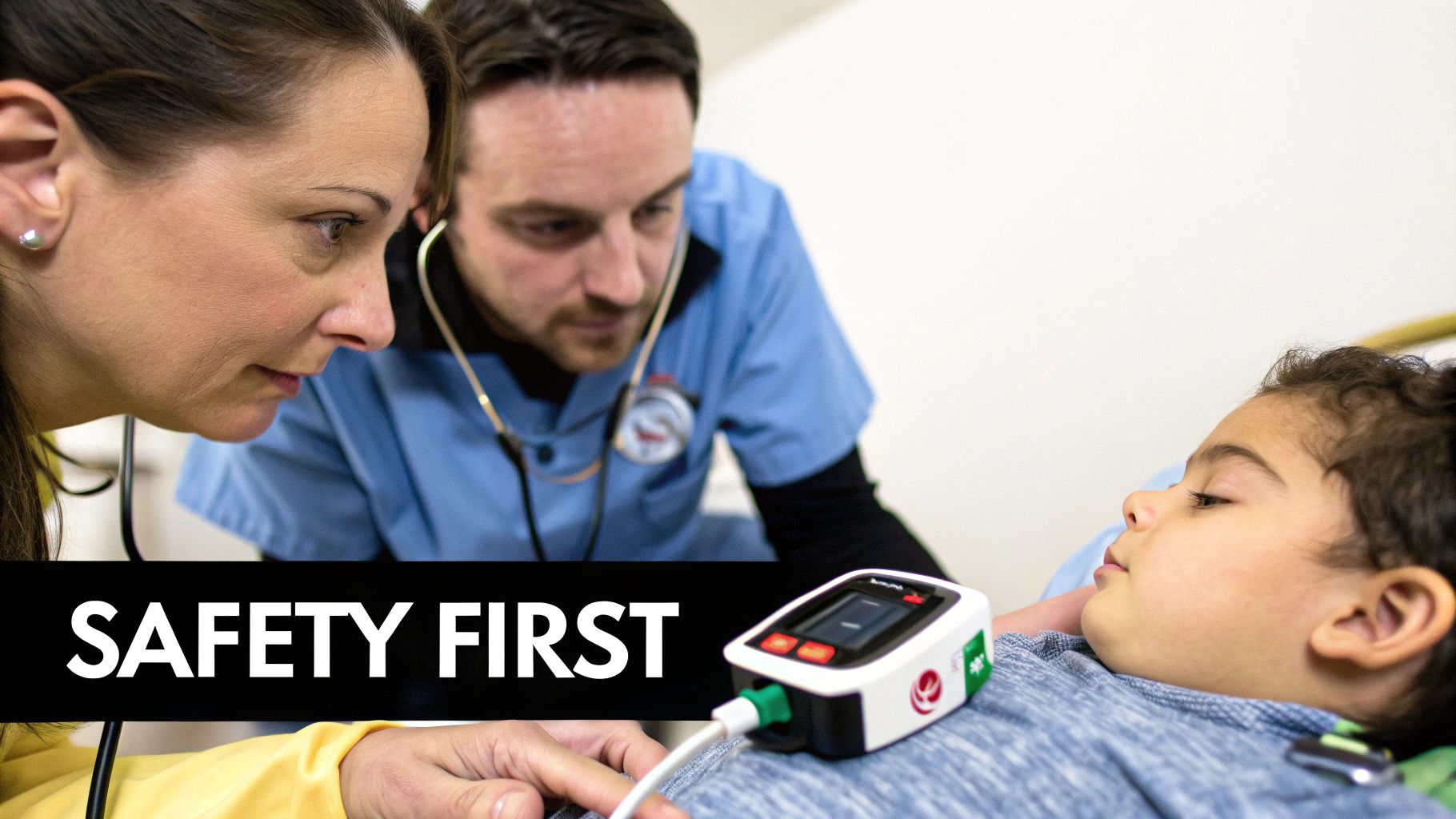
During the entire procedure, your child is never out of our sight. We use advanced medical equipment to keep a constant, careful watch on their vital signs, just like you’d see in a hospital. This non-stop stream of information lets us make immediate adjustments if necessary, making sure your child stays safe and stable from beginning to end.
The technology we use includes:
- Pulse Oximeter: A small, gentle clip on your child's finger that measures their heart rate and the oxygen levels in their blood in real-time.
- Blood Pressure Cuff: Automatically and regularly checks their blood pressure.
- EKG (Electrocardiogram): Monitors the rhythm and electrical activity of their heart.
This state-of-the-art monitoring setup acts as our eyes and ears, giving us constant reassurance that everything is going exactly as planned while we work to improve your child's dental health.
When performed in a controlled environment by a qualified team, sedation dentistry for children is remarkably safe. The combination of advanced training, modern technology, and strict safety protocols has created an environment where the focus can remain on achieving excellent dental health outcomes.
This commitment to safety has produced impressive results across the board. The safety of pediatric sedation dentistry has gotten better and better thanks to improved monitoring, specialized training, and refined protocols. Recent statistics show that serious complications are exceptionally rare, happening in less than 0.01% of cases. A four-year review of one pediatric practice involving 274 sedation cases reported zero serious adverse events, confirming that IV and moderate sedation are very safe options for kids. You can dive deeper into the data on the safety and effectiveness of sedation in dentistry.
The Role of Specialized Professionals
For deeper levels of sedation, like IV sedation, our team grows to include a specialist whose only job is to manage your child’s sedation. At Grand Parkway Smiles, we bring in a board-certified dentist anesthesiologist for these cases. This expert is solely focused on administering the medication and monitoring your child's vitals throughout the entire procedure.
This dedicated approach means our pediatric dentist can concentrate 100% on the dental work, knowing your child’s sedation is being handled by a specialist. This team-based system adds an invaluable layer of safety and ensures every part of your child's care is managed by an expert. It’s this level of commitment that makes modern sedation dentistry a trusted and reliable choice for protecting your child's smile.
Preparing for Your Child's Sedation Appointment
A smooth, successful sedation appointment is a team effort, and your prep work at home is a massive part of that. Knowing what to expect and how to prepare before and after the visit makes a world of difference. It helps ensure the sedation dentistry for children we provide is as safe and effective as it can be, setting your child up for a positive outcome and a healthier mouth.
Think of these guidelines as our shared game plan. Following them closely lets our team focus 100% on what we do best: restoring your child’s healthy, beautiful smile.
Before the Dental Visit
The groundwork for a great appointment starts the night before. These steps aren't just helpful suggestions—they are absolutely critical for your child’s safety and for the sedation to work as planned.
First up, and most importantly, are the fasting guidelines. We'll give you very specific instructions, but it usually means no food or drinks (not even water) for several hours before the appointment, typically after midnight. An empty stomach is non-negotiable; it's the number one way we prevent serious complications while a child is sedated.
Next, let's talk about comfort. Dress your child in loose-fitting, comfy clothes—think pajamas or soft sweatpants. This helps them feel relaxed and makes it much easier for our team to place monitors, like a little finger clip to check oxygen or a blood pressure cuff, without any fuss.
Finally, how you talk about the appointment really matters.
- Keep the Vibe Positive: Frame the visit as a trip to make their teeth strong and shiny. Steer clear of loaded words like "shot," "hurt," or "scary."
- Keep It Simple: You can explain that the dentist has some special sleepy juice to help them take a little nap while they fix their teeth. Always reassure them that you'll be right nearby the whole time.
- Stay Calm Yourself: Kids have amazing radar for parental anxiety. If they see that you're calm and confident, it sends them a powerful signal that everything is going to be okay.
After the Sedation Procedure
Once all the dental work is finished, the recovery phase begins. Your child will probably be pretty groggy, maybe a little wobbly, and definitely sleepy for a few hours. This is completely normal as the medication slowly wears off.
Your main job now is to be the captain of calm. Plan for a quiet, chill day at home with their favorite movies, audiobooks, or just snuggling on the couch. You'll need to keep a close eye on them until they are fully awake and steady on their feet to prevent any tumbles.
One of the biggest silver linings of sedation is that most children have little to no memory of the actual procedure. This is a huge win, as it helps prevent them from forming negative feelings about the dentist, paving the way for a more positive relationship with dental care in the future.
When they feel up to eating, stick with soft foods for the rest of the day. The local anesthetic we use to numb their mouth can last for a couple of hours, and we don't want them to accidentally bite their lip, tongue, or cheek.
Great Post-Procedure Food Choices Include:
- Yogurt, smoothies, or milkshakes
- Applesauce
- Mashed potatoes
- Pudding or Jell-O
- Lukewarm soup
Following these simple steps before and after the visit helps the entire process go off without a hitch, ensuring a safe and positive experience that leads to better long-term dental health.
Common Questions About Pediatric Sedation Dentistry
Thinking about sedation dentistry for your child naturally comes with a lot of questions. We get it. Getting clear, honest answers is the first step toward feeling confident and at ease with your child's treatment plan. Let's walk through some of the most common concerns we hear from parents.
When you have questions, you need answers fast. A well-run office with great communication, sometimes helped by responsive dental office answering services, makes sure you're never left wondering. It’s all about giving you a reliable point of contact when you need it most.
Is Sedation Dentistry Painful for My Child?
Not at all. In fact, the entire point of sedation is to make sure your child has a comfortable, calm, and anxiety-free visit. While they're relaxed under sedation, they won't feel the dental work being done. This is huge for their emotional well-being and allows our team to perform the highest quality treatment to restore their smile.
To make absolutely sure the procedure is painless, we also use a local anesthetic to completely numb the specific area we’re treating. Afterward, we'll give you detailed instructions on how to manage any minor tenderness once the numbness wears off, making for a smooth recovery at home.
Will My Child Remember the Dental Procedure?
This is one of the biggest wins for your child's future relationship with the dentist. Most types of sedation, especially oral and IV sedation, have a natural amnesic effect. This simply means your child will have little to no memory of the actual treatment.
By preventing scary or negative memories from forming, sedation helps build a foundation of trust. It helps foster a positive view of dental care that can last a lifetime, encouraging great oral hygiene habits well into their adult years.
How Long Does Recovery from Sedation Take?
The recovery time really depends on which type of sedation was used.
- Nitrous Oxide: The effects of "laughing gas" are gone within minutes of taking the mask off. Your child can hop up and get right back to their normal activities, ready to show off their healthier teeth.
- Oral or IV Sedation: Expect your child to be drowsy and sleepy for a few hours afterward. We always recommend a quiet day of rest at home with you keeping a close eye on them.
No matter what, we send you home with personalized, detailed after-care instructions to make the recovery period as smooth as possible.
Are There Alternatives to Sedation for Anxious Children?
Absolutely. Our first choice is always the least invasive method that will work for your child. We often start with behavioral approaches like "tell-show-do," where we explain and demonstrate everything first. Positive reinforcement and simple distractions also work wonders for many kids.
However, for very young children, those with severe anxiety, kids with special healthcare needs, or those who need a lot of dental work done at once, these techniques might not be enough. In those cases, sedation becomes the safest and kindest way to provide the care they need, protecting both their oral health and their emotional well-being.
At Grand Parkway Smiles, our pediatric team is here to answer every single question you have. We want you to feel completely comfortable with your child's care plan. Schedule a consultation today to talk about how we can protect your child's smile, together.